
Your Office Air May Be More Polluted Than You Think
Air purifier plants for office spaces are one of the simplest, most affordable ways to improve the air you breathe at your desk every day.
Here are the top air-purifying plants for offices at a glance:
| Plant | Key Benefit | Light Needs |
|---|---|---|
| Snake Plant | Removes formaldehyde, benzene | Low to bright indirect |
| Peace Lily | Filters ammonia, benzene | Low to medium |
| Spider Plant | Tackles formaldehyde, xylene | Low to medium |
| Pothos | Removes benzene, toluene | Low to medium |
| ZZ Plant | Drought-tolerant, filters VOCs | Low light |
| Boston Fern | Reduces formaldehyde, adds humidity | Medium indirect |
| Rubber Plant | Filters formaldehyde | Bright indirect |
| Bamboo Palm | Removes benzene, trichloroethylene | Medium to bright |
| Dracaena | Filters multiple VOCs | Low to medium |
| Areca Palm | Humidifies and filters toxins | Bright indirect |
Most people don’t realize that indoor air can be 2 to 5 times more polluted than the air outside. That’s according to the U.S. EPA.
In an office, the sources of that pollution are everywhere. Think carpet adhesives, printer ink, cleaning sprays, paint, and synthetic furniture. These release invisible chemicals called Volatile Organic Compounds (VOCs) — including formaldehyde, benzene, and xylene.
Over time, breathing these in can cause headaches, fatigue, difficulty concentrating, and even respiratory issues. This cluster of symptoms even has a name: Sick Building Syndrome.
The good news? A well-placed plant can help.
NASA’s famous 1989 Clean Air Study found that certain houseplants can reduce airborne toxins by up to 87% within 24 hours — though it’s worth noting that was in sealed lab chambers, not a typical ventilated office. In real-world settings, plants work best as a complement to good ventilation, not a replacement.
Beyond air quality, there’s another reason to bring plants to work. A 2014 University of Exeter study found that employees working near plants were about 15% more productive. Plants tap into our natural connection to living things — a concept known as biophilia — which helps reduce stress and sharpen focus.
So whether you manage a large open-plan workspace or just want to freshen up your home office corner, adding the right plants can make a real difference.
How Air Purifier Plants for Office Work to Clean Your Air
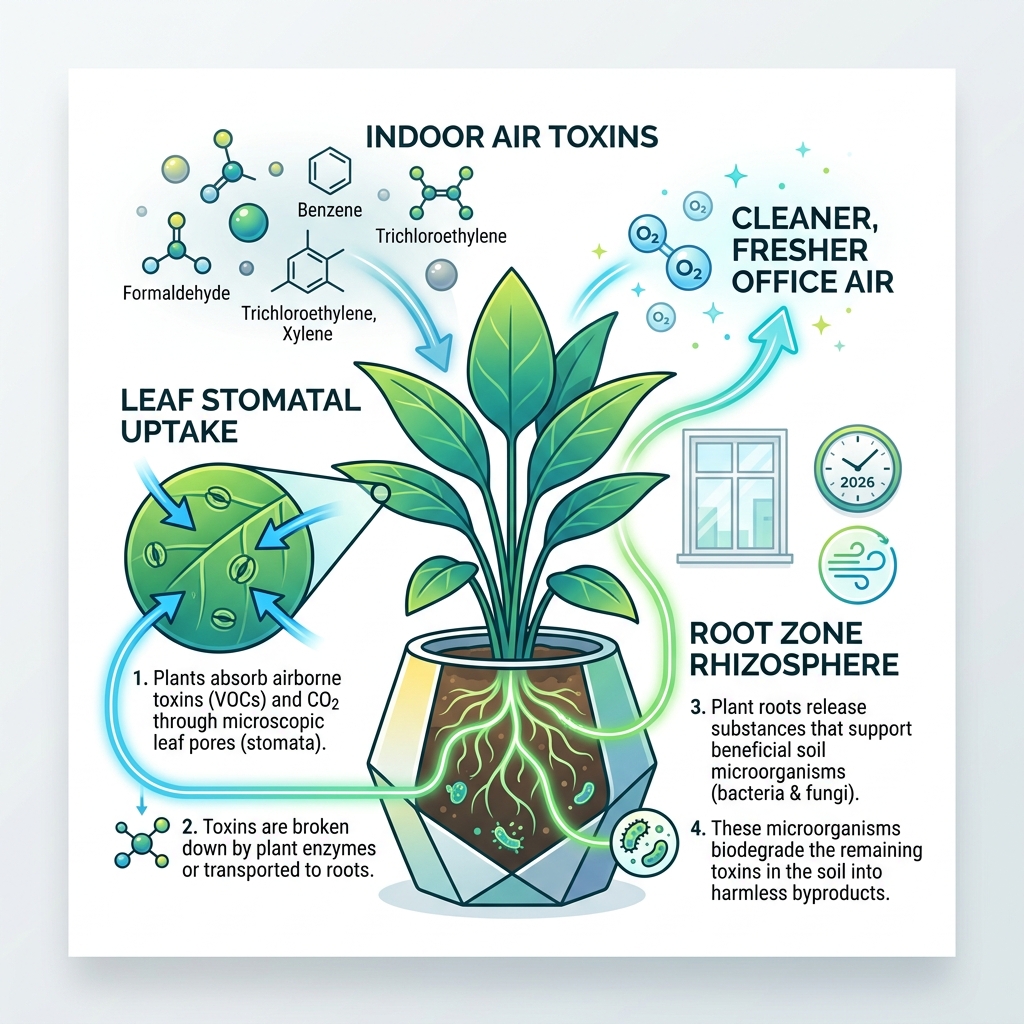
It might seem like magic, but the way plants clean our air is a fascinating biological process called phytoremediation. Think of your office plant as a tiny, self-powering air scrubber that never needs to be plugged in.
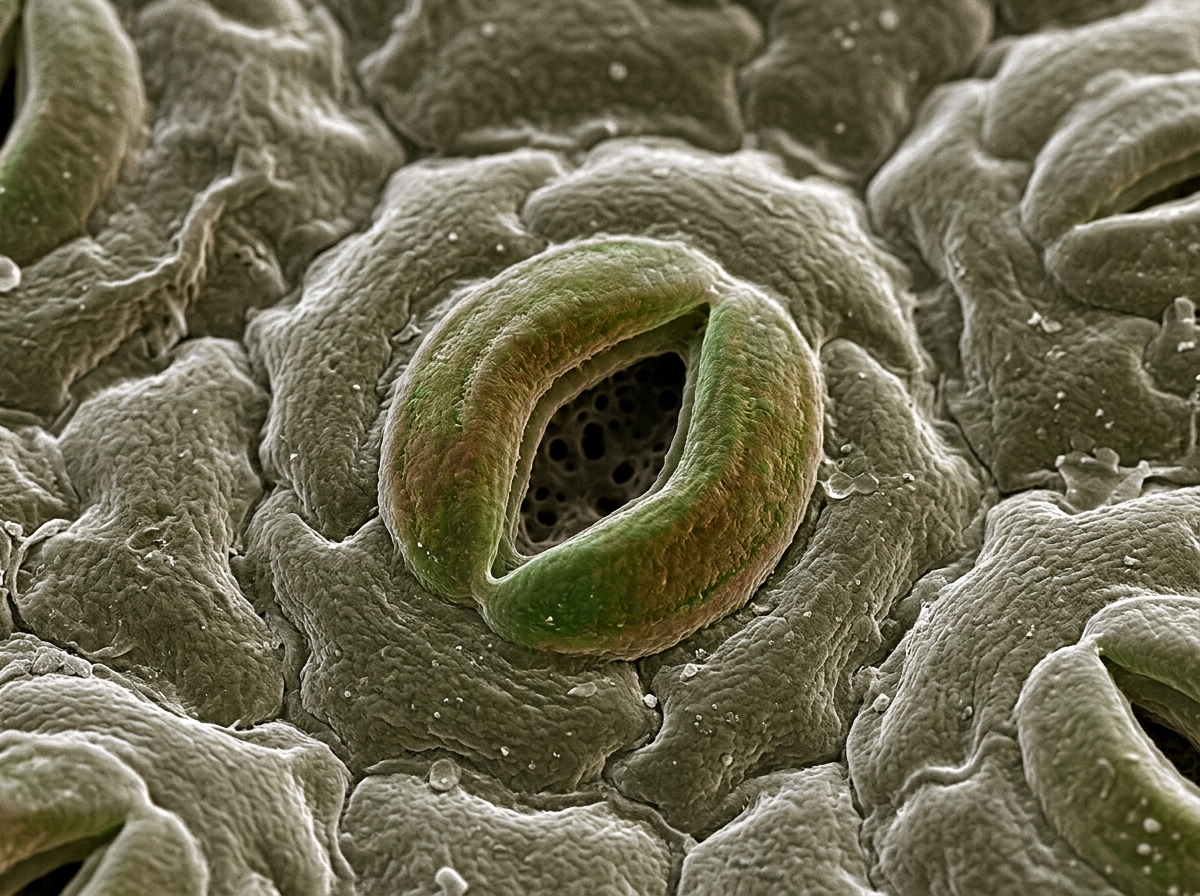
The primary way this happens is through stomatal uptake. Plants have microscopic pores on their leaves called stomata. While the plant “breathes” in carbon dioxide for photosynthesis, it also pulls in airborne toxins like benzene and formaldehyde. Once inside the leaf, these pollutants are either broken down by the plant’s own enzymes or sent down to the roots.
This leads us to the unsung heroes of the office cubicle: root microbes. Research, including a Comparative evaluation of air phytoremediation potential, shows that the microorganisms living in the soil around the roots do a heavy amount of the lifting. They actually metabolize VOCs, turning harmful chemicals into food for the plant.
Plants also improve our environment through transpiration. They release moisture into the air, which naturally regulates office humidity. In dry, air-conditioned buildings, this extra humidity can soothe dry eyes, scratchy throats, and even reduce the amount of dust floating around. For a deeper dive into this science, check out our indoor-plants-and-air-quality-a-comprehensive-guide.
Top 10 Air Purifying Plants for the Workplace
When selecting air purifier plants for office use, we want species that are tough, effective, and won’t die the moment you go on a long weekend. Here are our top picks for a healthier workspace.
1. Snake Plant (Sansevieria)
The Snake Plant is essentially the “superstar” of office greenery. It is famous for its snake-plant-benefits-for-air-quality, specifically its ability to convert CO2 into oxygen at night—most plants only do this during the day. It is incredibly efficient at removing formaldehyde, nitrogen oxides, and benzene.
2. Golden Pothos
If you want a plant that “roots in dreams” because it’s so hard to kill, this is it. Our pothos-plant-air-purification-guide highlights its ability to clear benzene and carbon monoxide. It looks great trailing off a high shelf or filing cabinet.
3. Aloe Vera
While great for minor office “emergencies” like paper cuts or small burns, the aloe-vera-air-purification-benefits are equally impressive. It monitors air quality by developing brown spots when the level of harmful chemicals becomes too high.
4. Peace Lily
The Peace Lily is a heavy hitter in plants-that-remove-toxins-from-air. It can filter out ammonia (often found in cleaning products), trichloroethylene, and formaldehyde. Just be warned: it’s a bit of a “drama queen” and will wilt visibly when it needs water.
5. Boston Fern
Ferns are nature’s humidifiers. As we discuss in our guide on ferns-and-indoor-air-cleaning, the Boston Fern is one of the best choices for removing formaldehyde—a chemical often found in office furniture glues and pressed woods.
Best Low-Light Air Purifier Plants for Office Cubicles
Not every desk is blessed with a window view. If you’re working under the hum of fluorescent lights, you need “indestructible” options.
- ZZ Plant: This plant is legendary for surviving in windowless rooms. It has a high tolerance for neglect and is excellent at filtering out volatile organic compounds.
- Snake Plant: As mentioned, it thrives almost anywhere. In low light, it just grows a bit slower.
- Peace Lily: It actually prefers indirect light and can survive in the dimmer corners of a large office.
For those with limited desk real estate, we recommend looking at best-small-air-purifying-plants and other low-maintenance-air-purifying-plants that won’t take over your keyboard.
Pet-Safe Air Purifier Plants for Office Spaces
If your office is pet-friendly or you work from home with a curious cat, safety is a priority. Many common air purifiers (like the Peace Lily or Pothos) can be toxic if nibbled.
- Spider Plant: This is a 100% safe, non-toxic choice. It’s a “guardian angel” that excels at removing carbon monoxide and xylene.
- Boston Fern: Safe for both cats and dogs, and it looks beautiful in a hanging basket.
- Areca Palm: A great “floor plant” option that is non-toxic and adds a tropical vibe to the breakroom.
For more pet-friendly ideas, see our list of cat-safe-air-purifying-plants or explore other tropical-indoor-plants-for-air-quality.
Essential Care and Maintenance for Office Greenery
To keep your air purifier plants for office working at peak efficiency, they need a little bit of love. A neglected, dusty plant can’t filter air effectively.
1. The Dust Factor Dust on leaves can block sunlight and clog the plant’s “pores” (stomata), reducing its air-cleaning power by up to 40%. Once a month, give the leaves a gentle wipe with a damp microfiber cloth. Think of it as a quick makeover that keeps them breathing easy.
2. The Finger Test The number one killer of office plants is overwatering. Before you reach for the watering can, stick your finger an inch into the soil. If it feels damp, wait. Most office plants, especially the Snake Plant and ZZ Plant, prefer to dry out between waterings.
3. Lighting and Placement Try to match the plant to the light. “Bright indirect light” means the plant is near a window but the sun isn’t hitting the leaves directly (which can cause “sunburn”). If you have zero windows, stick to the ZZ or Snake plant.
4. Pest Control Keep an eye out for “hitchhikers” like fungus gnats or spider mites. If you see tiny flies, it usually means the soil is staying too wet. Using organic fertilizers during the growing season (March to August) can help keep them strong and resilient. If you’re also looking to improve your sleep environment, these tips apply to the best-plants-for-bedroom-air-quality as well!
Frequently Asked Questions about Air Purifier Plants for Office
How many plants are needed per office size for clean air?
To see a noticeable improvement in air quality, the general rule of thumb is one medium-sized plant for every 100 square feet (about 9 square meters) of workspace. However, grouping plants together is even better. This creates a “microclimate” that naturally boosts humidity and increases the total leaf surface area available for filtering toxins.
Which pollutants do these plants effectively remove?
Office plants target several common “indoor villains”:
- Formaldehyde: Found in carpets, upholstery, and particleboard desks.
- Benzene: Often emitted by plastics, synthetic fibers, and some printer inks.
- Xylene: A common solvent found in rubber, leather, and printing supplies.
- Ammonia: Found in many window cleaners and floor waxes.
What are common mistakes to avoid with office plants?
- Overwatering: This leads to root rot, which is hard to fix.
- Blocking Vents: Don’t place your plant directly in front of an HVAC vent; the dry, moving air will “flash-dry” the leaves.
- Ignoring Drainage: Ensure your pots have holes at the bottom so water doesn’t sit and stagnate.
- Using Leaf Shine: Chemical leaf shine products can actually clog the stomata you’re trying to keep open for air purification!
Conclusion
At Computadora Agora, we believe that a high-tech office works best when it’s balanced with a little bit of nature. Bringing air purifier plants for office into your workspace isn’t just about aesthetics; it’s an investment in your mental clarity, stress reduction, and overall well-being.
While they might not replace a high-end mechanical HEPA filter for heavy-duty particle removal, they are the perfect “steady sidekick” for a fresher, more vibrant environment. They turn a sterile room into a living space where you can truly focus.
Ready to transform your desk into a green oasis? Explore our full collection of office-ready house plants and start breathing easier today!
