
Why Dust Electronics Environmental Monitoring Matters for Your Air
Dust electronics environmental monitoring is the use of electronic sensors and instruments to detect, measure, and track airborne particles in workplaces and outdoor environments — helping protect both worker health and community air quality.
Quick answer: What does dust electronics environmental monitoring involve?
- Measuring particle sizes — PM1, PM2.5, PM10, and Total Suspended Particulates (TSP)
- Using electronic sensors — optical, triboelectric, beta attenuation, and gravimetric methods
- Tracking in real time — continuous data logging, cloud dashboards, and automated alerts
- Meeting regulations — OSHA exposure limits, EPA air quality standards, and site-specific rules
- Protecting people — workers, nearby residents, and vulnerable populations
Most of us know dust is a nuisance. But the dust you can’t see is often the most dangerous. Particles smaller than 2.5 micrometers — called PM2.5 — are small enough to pass deep into your lungs. You inhale roughly 15,000 liters of air every day, and every breath at a dusty worksite or near a busy road carries a potential health risk.
Industries like construction, mining, cement production, and manufacturing generate enormous amounts of airborne particulate matter. Without the right monitoring tools, exposure goes undetected until health problems appear.
Modern dust electronics make it possible to catch problems early — before they become costly, dangerous, or legally problematic.
Understanding Dust Electronics Environmental Monitoring
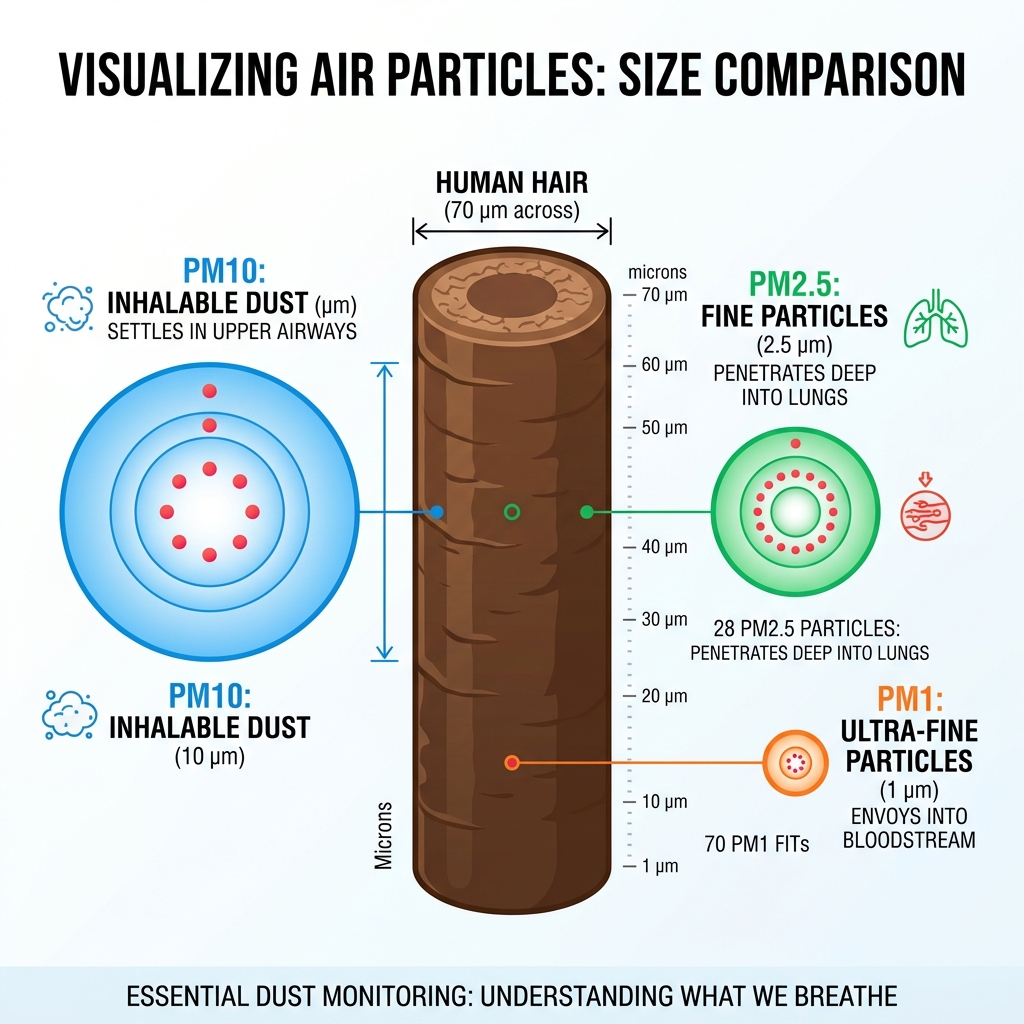
To manage what we can’t see, we first have to define it. In dust electronics environmental monitoring, we categorize dust by its aerodynamic diameter. This isn’t just a scientific quirk; it tells us how the dust behaves in the air and where it settles in the human body.
When we talk about “PM,” we mean Particulate Matter. The numbers following it represent the size in microns:
- PM1: Ultra-fine particles (less than 1 micron) often originating from combustion.
- PM2.5: Fine particles that can enter the gas-exchange region of the lungs.
- PM10: Coarse particles, like road dust or crushing waste, which are inhalable but usually stop in the upper respiratory tract.
- TSP: Total Suspended Particulates, encompassing all airborne particles regardless of size.
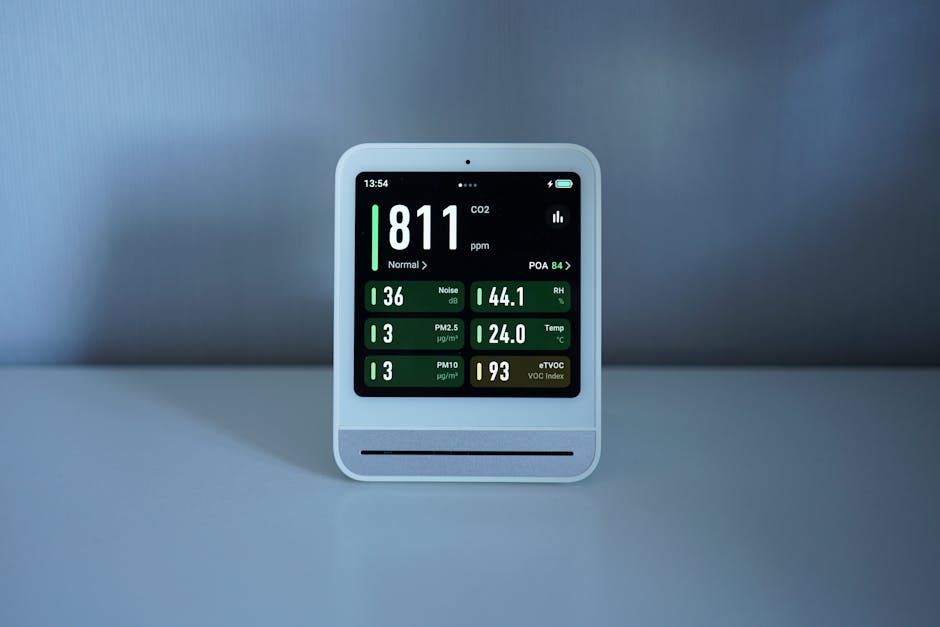
Using a modern Dust Monitor allows us to see these fractions in real-time. Unlike old-fashioned filters that had to be sent to a lab, today’s electronics provide a digital “heartbeat” of air quality.
The Role of Dust Electronics Environmental Monitoring in Industry
In heavy industry, dust isn’t just a health hazard; it’s a process indicator. In power generation, cement production, and metallurgy, monitoring dust levels in flue gas helps optimize combustion and detect filter failures before they lead to massive emissions.
For those working in tech-heavy environments, dust is the ultimate enemy of hardware. High particulate counts can lead to overheating and component failure. We’ve previously discussed the importance of removing-dust-from-electronics to maintain longevity, but prevention through environmental monitoring is always more effective than a reactive cleanup.
Advanced Dust Electronics Environmental Monitoring Sensors
The “electronics” part of this field is advancing rapidly. We are moving away from bulky machines toward miniaturized, on-chip solutions. Some of the most exciting developments include:
- On-chip electronic counters: Systems like the DUST (Dust System Tracker) use CMOS technology to monitor particle deposition in real-time, even in extreme environments like avionics or space missions.
- Modular Bricklets: For those building custom DIY or industrial setups, tools like the Doc | Tinkerforge provide accessible ways to measure dust density (up to 500µg/m³) using standardized digital interfaces.
Core Technologies and Measurement Principles
How does a small box actually “count” a microscopic speck of dust? There are four primary ways these devices work, each with its own strengths.
Optical Sensing and Laser Scattering
This is the most common technology in portable and “near-reference” monitors. It works on the principle of light scattering. When a particle passes through a laser beam, it redirects the light.
- Mie Scattering: Occurs when the particle size is similar to the light’s wavelength.
- Rayleigh Scattering: Occurs when the wavelength is much larger than the particle.
A photodiode detects these flashes of light, and an internal algorithm converts the “pulses” into mass concentration. This provides excellent real-time trends, though these devices often need a “heated inlet” to ensure that high humidity (which looks like dust to a laser) doesn’t skew the results.
Beta Attenuation and Gravimetric Reference
If you need “Gold Standard” accuracy for regulatory compliance, you look toward Beta Attenuation Monitors (BAM) or gravimetric sampling.
- Gravimetric: Physically collecting dust on a filter and weighing it. It’s slow but 100% accurate.
- Beta Attenuation: A device measures how much a beam of beta particles is weakened by dust collected on a moving tape. This method is highly correlated with gravimetric results and is used by the EPA for official air quality reporting.
Research into Real-time in-situ monitoring of particle deposition continues to push these boundaries, seeking ways to get gravimetric-level precision in a smaller, faster package.
Triboelectric Charge Transfer
Used primarily in industrial stacks and baghouses, the triboelectric effect is fascinatingly simple. When a dust particle strikes a metal probe, it transfers a tiny electrical charge. By measuring the current generated by millions of these strikes, we can determine the dust concentration. This is ideal for predictive maintenance—if a bag filter develops a tiny tear, the triboelectric sensor will see the spike in “strikes” immediately, allowing for a fix before a total system shutdown occurs.
Regulatory Compliance and Exposure Limits
We don’t monitor just for fun; we do it because the law demands it. In the US and Europe, regulatory bodies have set strict limits to protect the public.
Occupational Safety Standards
OSHA (Occupational Safety and Health Administration) focuses on the “breathing zone” of workers. One of the most critical standards involves Respirable Crystalline Silica.
- Permissible Exposure Limit (PEL): 50 µg/m³ over an 8-hour shift.
- Action Level: 25 µg/m³, which triggers mandatory monitoring and medical surveillance.
If you’re managing a site, keeping the air clean isn’t just about safety; it’s about avoiding heavy fines. Following basic dusting-tips-for-better-air-quality can help in office environments, but industrial sites require active filtration and constant electronic vigilance.
Ambient Air Quality Requirements
The EPA sets the National Ambient Air Quality Standards (NAAQS). In 2024, the EPA tightened the annual PM2.5 standard from 12.0 µg/m³ to 9.0 µg/m³. This change means many industrial facilities will need to upgrade their fenceline monitoring systems to ensure they aren’t contributing to local pollution.
Deployment, Maintenance, and Data Integrity
A sensor is only as good as its placement. If you put a dust monitor in a “dead zone” where the wind never blows, you’ll get a clean reading even if the rest of the site is covered in a cloud of grit.
Best Practices for System Deployment
When deploying dust electronics environmental monitoring systems, we always consider the “Three W’s”: Wind, Weather, and Work.
- Wind Direction: Place monitors both upwind and downwind of your activity to prove that you aren’t the source of a pollution spike.
- Height: Sensors should be at human breathing height (1.5 to 2 meters) for occupational safety.
- Obstructions: Keep sensors away from walls or tall trees that create artificial turbulence.
While a microfiber-cloth-dusting-guide is great for keeping your indoor sensors clean, outdoor units need more rugged protection.
Calibration and Maintenance Cycles
Dust monitors are hard-working machines. Most high-end units, like the Dust Sentry, feature a 32GB hard drive capable of storing over 5 years of data. However, the hardware needs love:
- Factory Calibration: Recommended every 24 months for the optical module.
- Pump Lifetime: Internal pumps usually last 1–3 years depending on the dust load.
- Field Checks: We recommend “zero and span” checks every 3 months to ensure the sensor hasn’t “drifted.”
| Feature | Personal Monitors | Area/Ambient Monitors |
|---|---|---|
| Placement | Clipped to worker’s lapel | Fixed on a tripod or pole |
| Objective | Measuring individual exposure | Measuring site emissions |
| Data Type | Short-term peaks/TWA | Long-term trends/Fenceline |
| Power | Battery (8-12 hours) | Solar or AC (Continuous) |
Integrating IoT and Cloud-Based Analysis
The biggest revolution in dust electronics environmental monitoring is the “Cloud.” Gone are the days of walking out to a machine with a USB stick to download data.
Remote Monitoring and Sensing-as-a-Service
Modern systems use cellular connectivity to beam data directly to a dashboard. This allows for:
- Real-time Alerts: Receive a text message the second PM10 levels cross a safety threshold.
- Solar Power: Devices like the Clarity Node-S require only one hour of direct sunlight per day to run indefinitely. They can even operate for 30 days in total darkness by slowing down their sampling rate.
- Multi-Gas Integration: Many platforms now allow you to add modules for Ozone (O3), Nitrogen Dioxide (NO2), and Black Carbon, giving you a complete picture of atmospheric health.
Even simple steps like cleaning-indoor-plants-for-dust help improve local air, but for industrial-scale problems, these IoT networks provide the “defensible data” needed for audits.
Frequently Asked Questions about Dust Monitoring
What is the difference between PM2.5 and PM10?
PM10 particles are “coarse” (up to 10 microns), like dust from a construction site or a dirt road. PM2.5 particles are “fine” (2.5 microns or smaller), often coming from smoke, vehicle exhaust, or chemical reactions in the atmosphere. PM2.5 is considered more dangerous because it can penetrate deeper into the lungs and even enter the bloodstream.
How often should dust monitoring equipment be calibrated?
For most industrial-grade optical monitors, a factory calibration is required every 2 years. However, “field calibration” or zero-checks should be performed every 3 months to maintain data integrity.
When should I use personal vs area dust monitors?
Use personal monitors when you need to know exactly what an individual worker is breathing during their shift (essential for OSHA compliance). Use area monitors for fenceline monitoring, community protection, or to trigger site-wide dust suppression systems (like water misters).
Conclusion
At Computadora Agora, we believe that clean air and high-performing technology go hand-in-hand. Whether you are protecting your sensitive electronics from particulate buildup or ensuring your construction site meets the latest EPA standards, dust electronics environmental monitoring is your most powerful tool.
By moving toward data-driven safety and environmental stewardship, you aren’t just checking a box for a regulator—you’re ensuring the long-term health of your workforce and your community. Stay proactive, keep your sensors calibrated, and always be ready for the next audit with a robust, cloud-connected monitoring strategy.
For more tips on maintaining a clean and healthy environment, check out our More info about cleaning services page.
