
Why Your Ceiling Fan Might Be Making Your Home Dustier
Dusting ceiling fans is one of the most overlooked home cleaning tasks — and one of the most important for your family’s health.
Here’s a quick overview of the best ways to dust a ceiling fan:
- Turn off the fan and wait for the blades to stop completely
- Lay a drop cloth on the floor beneath the fan to catch falling dust
- Use the pillowcase method — slip an old pillowcase over each blade and pull it back slowly to trap dust inside
- Wipe blades with a damp microfiber cloth to remove any remaining residue
- Dust the motor housing and light fixtures with a dry cloth or compressed air
- Shake the pillowcase outside and toss it in the laundry
No ladder? No problem. An extendable duster with a flexible head — many adjust from 13 to nearly 50 inches — lets you reach most ceiling fans from the floor.
Every time a dirty ceiling fan spins, it flings dust, pollen, and allergens into the air you breathe. If anyone in your home deals with allergies or asthma, that invisible cloud of particles matters — a lot.
The buildup isn’t just a health issue, either. Extra dust on the blades adds weight that throws off balance, causes wobbling, and makes the motor work harder than it needs to.
The good news? Cleaning a ceiling fan takes less than five minutes once you know the right technique. This guide walks you through everything — from the safest methods to the smartest tools.

Why Dusting Ceiling Fans is Essential for Your Home
We often forget to look up, but our ceiling fans are essentially giant magnets for every airborne particle in our homes. From pet hair and lint to pollen and skin cells, these particles settle on the leading edges of the blades. When you flip that switch, the fan doesn’t just move air; it acts as a centrifugal distributor for allergens.
Maintaining a clean fan is a vital part of dusting tips for better air quality. When dust accumulates, it can trigger respiratory issues, particularly for those sensitive to dust and allergens in your apartment. Beyond health, there is a mechanical cost to neglect. According to experts, dirty fan blades and motors need regular attention to run smoothly.
Heavy dust buildup creates an imbalanced load. This imbalance is one of the primary reasons fans start to wobble or make clicking noises. Furthermore, that layer of “fuzz” on the motor housing acts like an insulator, trapping heat and potentially shortening the motor’s lifespan. By dusting ceiling fans regularly, you ensure the motor breathes easily and the blades move air efficiently, which can even save you a few dollars on your energy bill. For a deeper dive into the mechanics, you can learn how to clean a ceiling fan, from the blades to the motor.
Essential Tools and Materials for Dusting Ceiling Fans
Before we climb any ladders, let’s talk about the gear. You don’t need a professional cleaning crew’s budget, but the right tools make the job “mess-free” rather than “mess-everywhere.”
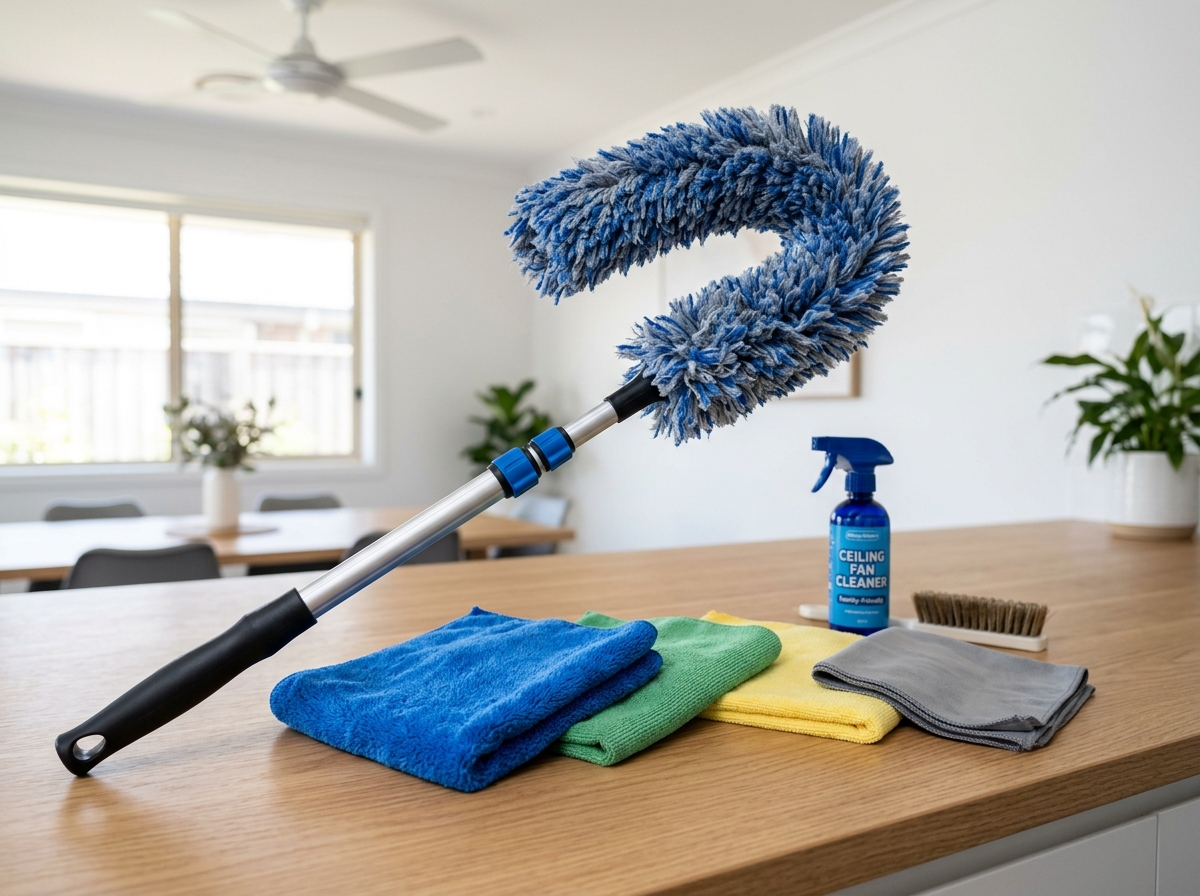
The Microfiber Advantage
We highly recommend using microfiber over traditional feather dusters. While feather dusters often just move dust from the fan to your sofa, a high-quality microfiber cloth actually “locks” the dust into its tiny fibers. Check out our microfiber cloth dusting guide to see why these are the gold standard for home maintenance.
Specialized Dusters
If you have high ceilings, an extendable pole is a lifesaver. Many modern ceiling fan dusters feature a 49.7-inch reach and a U-shaped or flexible head designed to hug both sides of the blade simultaneously. These specialized tools often cost between $15 and $25 and are highly rated by homeowners for their efficiency.
The DIY Staples
- Pillowcases: An old, clean pillowcase is the ultimate “hack” for trapping thick dust.
- Step Ladder: Ensure it is sturdy and placed on a level surface.
- All-Purpose Cleaner: A simple mix of water and a few drops of dish soap, or a 50/50 water and white vinegar solution.
- Compressed Air: Perfect for blowing dust out of the motor vents without introducing moisture.
| Tool Type | Dust Retention | Reach | Best Use Case |
|---|---|---|---|
| Microfiber Cloth | Excellent | Manual (Arm’s length) | Deep cleaning and polishing |
| Extendable Duster | Good | High (Up to 50 inches) | Weekly maintenance/No ladder |
| Pillowcase | Superior | Manual (Arm’s length) | Heavy buildup/Dust containment |
| Feather Duster | Poor | Varies | Light, daily dusting (Not recommended) |
Step-by-Step Techniques for Blade Maintenance
Safety first! Before you even touch the fan, ensure the power is off. For an extra layer of safety, especially if you’re working on the motor or light wiring, turn the power off at the circuit breaker. We also suggest waiting a few minutes for the light bulbs to cool down to avoid burns.
Protect your space by laying down an old sheet or drop cloth. This should cover an area about twice as wide as the fan’s span. This way, any “stray” dust bunnies that escape your tools won’t end up in your carpet or on your bed. Following these 7 simple steps that make cleaning ceiling fans a breeze will ensure a professional result.
Mastering the Pillowcase Method for Dusting Ceiling Fans
This is our favorite method for fans that haven’t been cleaned in a while.
- Slide it on: Take an old pillowcase and slide it over the entire length of one fan blade.
- The “Envelope” Wipe: Use your hands to press the fabric against the top and bottom of the blade simultaneously.
- The Pull: Slowly pull the pillowcase back toward the tip of the blade. The dust is wiped off and falls directly inside the pillowcase instead of on your head.
- Repeat: Move to the next blade and repeat. Once finished, take the pillowcase outside, shake it out, and toss it in the wash.
No-Ladder Techniques for Dusting Ceiling Fans
If you aren’t comfortable on a ladder, or if your fan is positioned over a stairwell, an extendable duster is your best friend. Look for a model with a “slanted” or “double-sided” brush head.
To use this effectively, adjust the pole to the necessary length (typically between 13 and 49 inches). Start at the center of the fan (the canopy) and work your way down. Use slow, deliberate strokes. If the duster head is microfiber, it will use static electricity to grab the dust. For very high fans, we recommend using a dry duster head first to remove the bulk of the debris before following up with a damp attachment if needed.
Cleaning the Motor Housing, Lights, and Accessories
The blades are only half the battle. To truly stop the dust bunnies, we need to look at the “guts” and the “glamour” of the fan.
The Motor and Housing
Dust inside the motor housing can lead to overheating. Since you shouldn’t spray liquids into the motor, this is where removing dust from electronics techniques come in handy. Use a can of compressed air to blow out the vents. Follow up by wiping the exterior housing with a dry microfiber cloth.
Light Fixtures and Globes
If your fan has a light kit, the glass globes likely have a film of dust and grime.
- Remove and Soak: Carefully remove the glass shades and soak them in warm, soapy water.
- Dry Thoroughly: Ensure they are 100% dry before reattaching them to avoid electrical issues.
- Bulb Check: While the globes are off, wipe the bulbs with a dry cloth and replace any that are flickering.
Accessories: Remotes and Pull Chains
Pull chains can be wiped down with a damp cloth. For remotes, remove the batteries first. Use a cotton round dipped in 70% isopropyl alcohol to disinfect the surface and cotton swabs for the grime around the buttons. Let it dry completely before putting the batteries back in. For a comprehensive look at these details, consult this ceiling fan cleaning guide.
Pro Tips to Prevent Future Dust Buildup
Once your fan is sparkling, you’ll want to keep it that way for as long as possible. Here are some “pro” secrets:
- The Car Wax Hack: Many experts suggest applying a thin layer of paste car wax to the tops of the blades after cleaning. Buff it out with a clean cloth. This creates a slick surface that makes it much harder for dust to “stick.”
- Anti-Static Sprays: You can use a commercial anti-static spray or even a light DIY mix of water and a drop of fabric softener to repel dust.
- Seasonal Direction: Use your cleaning time as a reminder to flip the seasonal switch. In the summer, fans should spin counter-clockwise to push cool air down. In the winter, they should spin clockwise at a low speed to pull cool air up and push warm air (trapped at the ceiling) back down.
For more preventative measures, see this guide on how to keep dust off your ceiling fan.
Frequently Asked Questions about Fan Cleaning
How often should I be dusting ceiling fans?
For most homes, a quick dusting once a month is sufficient. However, if you live in a particularly dusty area, have multiple pets, or suffer from severe allergies, you might want to move to a bi-weekly schedule. At the very least, perform a deep clean (including the motor and lights) twice a year.
What is the best way to clean a greasy kitchen fan?
Kitchen fans are unique because they collect airborne grease which “glues” dust to the blades. A simple dry dusting won’t work here. Use a degreaser or a heavy-duty vinegar and dish soap solution. Apply the cleaner to your cloth — never directly to the fan — and let it sit on the blade for a minute before wiping.
Can I clean my outdoor ceiling fan with a hose?
Only if the fan has a UL WET rating. Fans rated as UL DAMP are moisture-resistant but cannot handle a direct stream of water. If your fan is “Indoor Only” (UL DRY), keep the hose far away! Always check the manufacturer’s label before using water.
Conclusion
At Computadora Agora, we believe that a clean home is a healthy home. Dusting ceiling fans might seem like a small chore, but its impact on your indoor air quality and the longevity of your appliances is massive. By incorporating these techniques into your regular maintenance routine, you’ll ensure better airflow efficiency and a dust-free environment for your family.
Ready to tackle the rest of your home? Visit our cleaning tips section for more expert advice on keeping your living space pristine!
