
Your Dryer Vent Is a Hidden Fire Hazard — Here’s How to Fix It
A diy vent cleaning kit is one of the smartest tools a homeowner can own. Here are the top options to consider:
| Kit | Reach | Power Source | Best For |
|---|---|---|---|
| Holikme Dryer Vent Cleaner | 30 ft | Drill or manual | Long ducts with bends |
| VEVOR Duct Cleaning Brush | 40 ft | Drill or manual | Extra-long runs |
| Everbilt Lint Brush | 12 ft | Drill | Budget buyers |
| LintEater Kit | 12 ft | Drill | Beginners |
| Vac Systems Air Kit | 25 ft | Compressed air | Deep clears |
Most homeowners never think about their dryer vent — until something goes wrong.
Here’s a sobering fact: according to the U.S. Fire Administration, failure to clean the dryer is the leading cause of home clothes dryer fires. Lint builds up slowly, deep inside ductwork, well past what any lint trap can catch. You can’t see it. But it’s there.
The good news? You don’t need to hire a professional to fix it.
A quality DIY kit can navigate tight bends, pull out years of lint buildup, and restore your dryer to peak efficiency — often in under an hour. And with kits starting as low as $22, the savings compared to a $150 professional cleaning are hard to ignore.
But not all kits are created equal. Reach, brush type, rod flexibility, and power source all make a big difference — especially if your duct runs long or has multiple turns.
Below, we break down the best options on the market so you can pick the right one for your home.
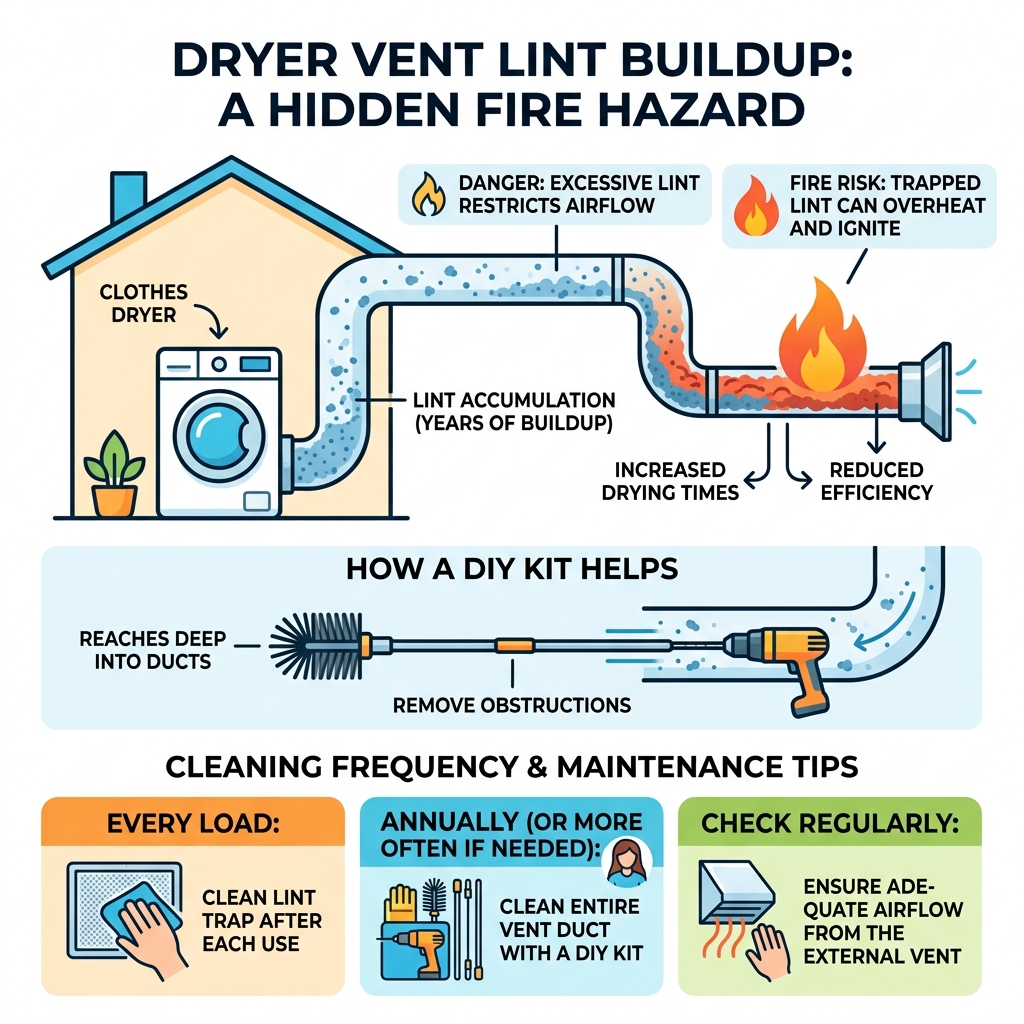
Essential Components of a High-Quality Kit
When you start shopping for a diy vent cleaning kit, you might be overwhelmed by the number of pieces in the box. However, a high-quality kit is more than just a brush on a stick. To achieve professional-level results, we need tools that can handle the specific geometry of your home’s ductwork.

Flexible Rods: The Backbone of the Kit
The most critical part of any kit is the set of rods. Most residential dryer vents aren’t a straight shot to the outside; they curve, turn 90-degree angles, and sometimes run through tight attic spaces. High-quality rods are usually made of reinforced nylon. This material is “Goldilocks” flexible—stiff enough to be pushed through a long duct, but pliable enough to navigate a 90-degree bend without snapping. Some premium kits even include a “lead rod,” which is extra flexible to help the brush head find its way around the first few turns.
Nylon Brushes and Auger Heads
The brush head is what actually does the heavy lifting. You want high-strength nylon bristles that are tightly packed. These bristles scour the walls of the vent, dislodging the “baked-on” lint that accumulates due to the heat and moisture of the dryer. Many kits come with multiple brush sizes to accommodate different pipe diameters, ensuring you get a deep clean whether you have a standard 4-inch duct or something specialized.
Drill Attachments and Vacuum Adapters
While you can use many kits manually, the real cleaning power comes from a power drill. A drill attachment (usually a hex-shank adapter) allows the rods to spin at high speeds, creating a “whipping” action that breaks up stubborn clogs.
Equally important are the vacuum and blower adapters. As you loosen the lint, it needs a place to go. A vacuum adapter allows you to hook up a shop vac to the dryer end of the vent, sucking up the debris as the brush knocks it loose. This prevents the lint from simply settling back down once you pull the brush out. For more maintenance insights, check out our guide on air filter replacement schedules to keep your whole home running efficiently.
Comparing the Best DIY Vent Cleaning Kit Options
Choosing the right diy vent cleaning kit depends largely on the length and complexity of your vent. If you live in an apartment with a short 5-foot run to an outside wall, a massive 40-foot kit is overkill. Conversely, if your dryer is in the basement and vents through the roof, a basic 12-foot kit won’t get the job done.
Drill-Powered vs. Manual
Most modern kits are designed to be drill-powered. The mechanical rotation provides a level of scrubbing that manual pushing simply can’t match. However, manual kits are still useful for very short, straight runs or for people who don’t own a cordless drill.
Compressed Air Kits
For those who want a truly professional touch, compressed air kits are an alternative to brushes. These kits use a “reverse skipper nozzle” attached to a long hose. When connected to an air compressor (usually 20 gallons or larger), the nozzle “jumps” through the duct, using high-pressure air to blow lint backward toward the vacuum. While effective, these require more specialized equipment than a standard brush kit.
If you are wondering about other vents in your home, we have a detailed breakdown on how often to clean AC vents to help you stay on top of your HVAC maintenance.
Best for Long Ducts: The 30-Foot DIY Vent Cleaning Kit
For homes where the laundry room is far from an exterior wall, a 30-foot or 40-foot kit is essential. The Holikme 30 Feet Dryer Vent Cleaner Kit is a standout here, boasting over 35,000 positive ratings.
Key Features of Long-Reach Kits:
- Reinforced Nylon: At 30 feet, the torque from a drill can cause cheaper rods to twist into a knot. High-rated kits use reinforced nylon to prevent this.
- Threaded Connections: Most long kits use screw-in connections. A pro tip: always run your drill in a clockwise direction. If you reverse the drill, you might unscrew the rods while they are 20 feet deep in your wall!
- Multiple Brush Heads: Kits like the VEVOR 40-foot option often include 20+ pieces, including different brush sizes and lint trap brushes for the dryer itself.
Best Budget-Friendly DIY Vent Cleaning Kit
If you are on a budget or have a relatively simple vent setup, you don’t need to spend a fortune. Budget-friendly options like the Everbilt 12 ft. Extendable Kit or the Project Source Cleaning Kit offer great value.
These kits typically provide 12 feet of reach, which is plenty for dryers located on exterior walls. Despite the lower price point—often under $30—they still include flexible rods and drill adapters. They are perfect for annual maintenance and can pay for themselves in a single use by reducing your energy bills and extending the life of your appliance.
Step-by-Step: How to Safely Use Your Kit
Using a diy vent cleaning kit isn’t complicated, but doing it correctly ensures you don’t damage your ducts or get a brush stuck.
- Preparation: Unplug your dryer and pull it away from the wall. Disconnect the flexible duct (the “foil” hose) from the wall. This is a great time to use a vacuum to clear out the back of the dryer itself.
- Initial Cleaning: Use a small detailing brush or your vacuum to clear any loose lint from the immediate opening of the duct.
- Assemble the Rods: Start by attaching the brush head to your first rod (or the specialized lead rod if your kit has one). Thread the rods together firmly. Many experts recommend adding a small piece of electrical tape over the joints for extra security.
- The Cleaning Process: Insert the brush into the duct. Attach your drill to the end. Always spin the drill clockwise. Move the brush back and forth in 1-2 foot increments as you feed it deeper into the vent. This “scrubbing” motion is what dislodges the lint.
- Vacuum as You Go: If you have a vacuum adapter, keep the shop vac running. It will catch the clouds of lint as they are loosened. If you are cleaning from the outside in, you can actually turn the dryer on to “Air Fluff” (no heat) to help blow the lint out toward you.
- Final Cleanup: Once you’ve reached the end of the vent, slowly pull the rods back out, continuing to spin the drill. Reattach your dryer, slide it back into place, and run a 10-minute air fluff cycle to clear any remaining loose dust.
For more tips on keeping your home’s air systems clear, see our home ventilation cleaning tips. Also, a clean vent is just one part of home health; don’t let your furnace choke on your allergies by neglecting your HVAC filters.
Frequently Asked Questions about Dryer Maintenance
Can a diy vent cleaning kit achieve professional results?
Yes! In many cases, a high-quality DIY kit used with a power drill and a shop vac can achieve results nearly identical to a professional service. Professionals often use similar brush and rod systems, though they may have more powerful truck-mounted vacuums. The key to “professional” results at home is patience—moving slowly and ensuring you clear the entire length of the duct.
How often should I use my diy vent cleaning kit?
We recommend a deep clean at least once a year. However, if you have a large family, do multiple loads of laundry a day, or have pets that shed, you should consider cleaning the vent every six months. Regular maintenance prevents the lint from becoming a “plug” that is much harder to remove.
What are the signs my dryer vent is clogged?
If you notice any of the following, it’s time to break out your diy vent cleaning kit:
- Increased Drying Time: If towels take two cycles to dry, your vent is likely restricted.
- Hot Exterior: If the top of the dryer feels unusually hot to the touch during a cycle.
- Burning Smell: This is an emergency sign—lint is scorching, and a fire could be imminent.
- No Airflow: If you go outside while the dryer is running and don’t feel a strong breeze coming from the vent flap.
Conclusion
Taking the time to maintain your dryer vent is one of the most effective ways to protect your home and your wallet. Whether you choose a high-reach 40-foot system or a simple 12-foot budget kit, the peace of mind that comes with a fire-safe home is priceless.
While DIY kits are fantastic for regular maintenance, there are times when a professional touch is needed—especially if you suspect a bird’s nest is blocked deep in the pipe or if your ductwork is damaged. You can learn more about finding a certified air duct cleaner here.
At Computadora Agora, we are dedicated to helping you keep your home running smoothly. For more DIY guides and maintenance strategies, explore more expert cleaning tips on our blog. Stay safe, and happy cleaning!
