
Is It Safe to Spray Microban in Your Air Ducts? Here’s What You Need to Know
Can I spray Microban in my air ducts? Yes — but only under specific conditions, and it is not a simple DIY task.
Here is a quick summary:
- Microban Disinfectant Spray Plus (EPA Reg. No. 70385-5) is officially approved for use in air ducts, but only after visible microbial growth has been removed and the moisture source causing it has been fixed
- It is not meant for routine or preventative use
- Application requires proper PPE, ventilation controls, and specialized equipment
- The HVAC system must be turned off during application
- Never use the system fan to distribute the product through ducts
If you have noticed a musty smell from your vents, or a professional has confirmed microbial growth in your ductwork, Microban may be a legitimate part of the solution. But there is an important catch: real-world users have reported overwhelming chemical odors that lingered for months after application — even when the system was not running.
One forum user described having to call their HVAC company back twice to manually wipe out the ductwork, and still detected fumes in their living room long after. That kind of experience is more common than product marketing suggests.
This guide walks you through exactly how to do duct sanitization safely and correctly — so you get the antimicrobial benefits without the headaches.
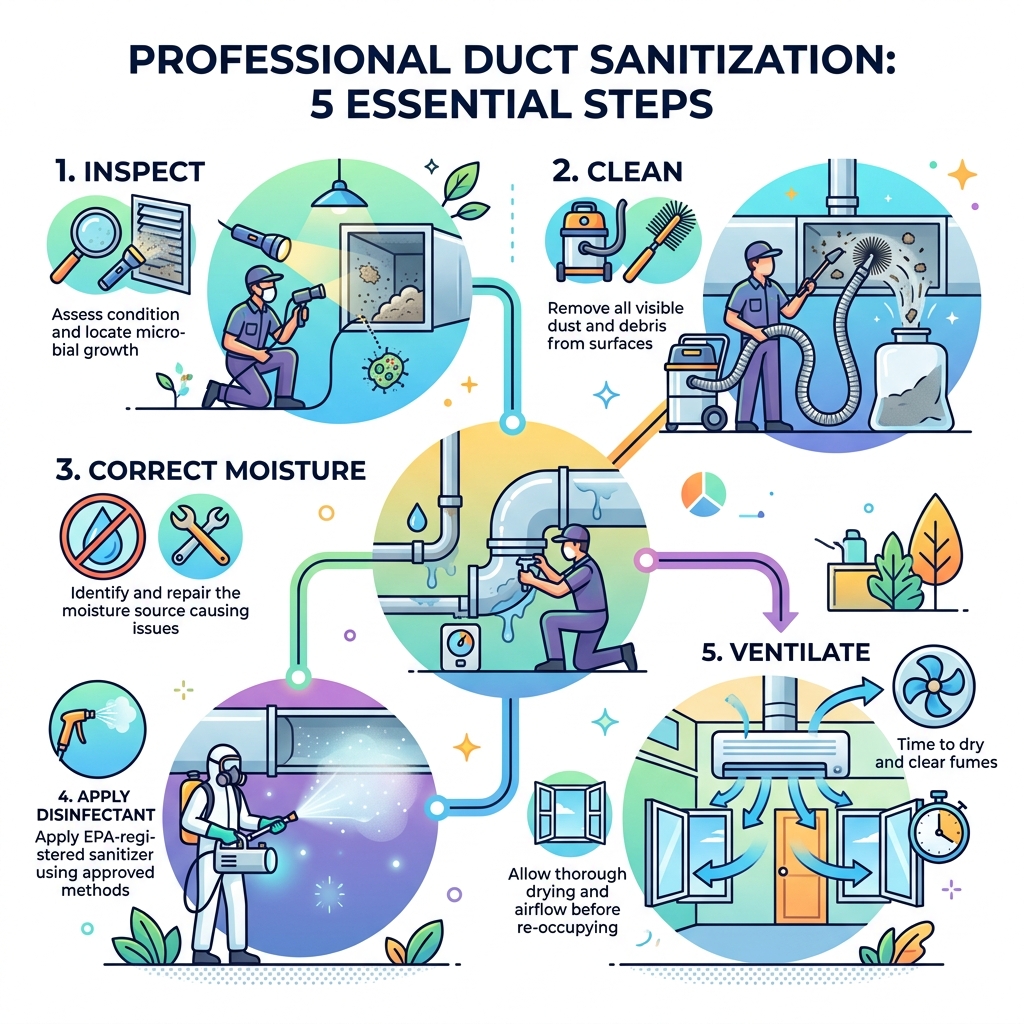
Understanding EPA Regulations: Can I Spray Microban in My Air Ducts?
When we ask, “can i spray microban in my air ducts,” we are really asking about federal law. The Environmental Protection Agency (EPA) treats disinfectants like pesticides. According to the Official EPA Product Label and Usage Directions, Microban Disinfectant Spray Plus (EPA Reg. No. 70385-5) is specifically registered for use in HVAC systems, but it comes with strings attached.
Microban acts as a bacteriostat, fungistat, and mildewstat. This means it doesn’t just kill what is there; it inhibits the future growth of bacteria, mold, and mildew. It is formulated for use on unlined sheet metal and flexible ducts, but you cannot just point and shoot.
Before even touching the spray trigger, two things must happen:
- Visible Growth Removal: You must physically remove the mold or debris. You cannot “disinfect” a pile of dust or a thick colony of mold.
- Moisture Source Correction: Mold is a symptom of a water problem. If you don’t fix the leak or the high humidity, the mold will be back before the Microban even dries. Understanding the Threat of Mold in Your Home is the first step in realizing that chemicals are a secondary defense, not a primary cure.
Step-by-Step Guide to Safe Duct Sanitization
Sanitizing a duct system is a surgical procedure for your house. We follow the NADCA ACR 2002 standards, which provide the industry’s gold standard for HVAC restoration. Before we begin, we must verify the mechanical integrity of the ducts. If the ducts are rusted through or the insulation is falling apart, the disinfectant won’t help; it will just leak into your wall cavities.
For those looking for general Home Ventilation Cleaning Tips, sanitization is the final step, never the first.
Preparation and Safety Precautions for Microban Application
Safety isn’t just a suggestion; it’s a requirement. Microban contains active ingredients like o-Phenylphenol, which can be irritating. To handle this safely, we use:
- Chemical-resistant coveralls (Tyvek suits)
- Chemical-resistant gloves and goggles
- Full-face respirators (especially if you are working inside the duct or the contamination level is high)
During application, we must maintain negative pressure within the duct system (typically 0.015 to 0.025 inches of water gauge). This ensures that any mist or Volatile Organic Compounds: Hidden Dangers in Your Household Products are pulled out of the house through a HEPA-filtered vacuum rather than drifting into your bedrooms. Guarding Your Child’s Health: Understanding Indoor Air Quality Hazards means ensuring these chemicals stay exactly where they belong: inside the metal pipes.
| Application Method | Surface Type | Coverage Rate |
|---|---|---|
| Mist/ULV Fog | Bare Metal / Flex Duct | 1,000 sq. ft. per gallon |
| Direct Spray | Bare Metal / Flex Duct | 500 sq. ft. per gallon |
| Mist/ULV Fog | Semi-Porous Surfaces | 500 sq. ft. per gallon |
| Direct Spray | Semi-Porous Surfaces | 250 sq. ft. per gallon |
Proper Application Techniques: Can I Spray Microban in My Air Ducts Safely?
To answer “can i spray microban in my air ducts” effectively, we look at the equipment. Standard “pump sprayers” often produce droplets that are too heavy, leading to pooling and those dreaded long-term odors.
The professional method uses ULV (Ultra-Low Volume) fogging. This creates tiny particles between 15 and 60 microns. These particles stay airborne long enough to coat the entire interior circumference of the duct. According to the Product Bulletin Technical Data, fog will carry about 8 feet from the point of application. This means you need access points every 8 feet to ensure uniform coverage.
Once applied, the product needs at least 10 minutes of wet contact time to be effective. It usually dries within 15 to 20 minutes. Crucially, there is no rinsing required. However, you must keep the HVAC system off during this time. Using the system fan to “blow” the chemical through the house is a major violation of the EPA label and can lead to Increasing Threat of Smoke and Chemical Pollution in Homes.

Managing Post-Application Concerns and Odors
This is where the “DIY” dream often turns into a nightmare. Microban has a distinct, lingering scent. While the label says it dries quickly, real-world reports suggest that “off-gassing” can last for weeks.
If you experience a persistent metallic or “chemical” smell, it usually means the product was over-applied or pooled in a low spot of the ductwork. In some cases, odors have been reported to last for over 2 months. To mitigate this, we recommend:
- Increased Ventilation: Run the HVAC system with windows open for several hours after the product has dried.
- Manual Wipe-Down: If the smell is unbearable, you may need to physically reach into the returns and wipe the surfaces with water to remove the excess film.
- Sealants: In extreme cases, professionals apply a coating like Foster 40-20 to “lock in” the odors.
We always suggest looking into Safe Cleaning Products for Home Air and Avoiding Chemical Cleaners Indoors whenever possible to minimize these risks.
Long-Term Effectiveness: Can I Spray Microban in My Air Ducts Frequently?
Microban is a “long-hauler.” One proper application can be effective for 6 months to 2 years. Because it is so persistent, the EPA mandates that it should never be applied more than once a month—and even then, only if new growth is confirmed.
If you find yourself needing to disinfect every few months, you have a moisture problem, not a cleaning problem. Stick to a regular Air Filter Replacement Schedule and monitor your humidity. Knowing How Often to Clean AC Vents (usually every 3-5 years) will help you avoid over-using chemicals.
Professional vs. DIY: When to Call an Expert
While you can buy Microban online, the equipment required to apply it safely is expensive and technical. Professionals use high-powered HEPA vacuums to create the necessary negative pressure and specialized ULV foggers that most homeowners don’t have in the garage.
Furthermore, if your ducts are large enough to require entry, you fall under OSHA confined space regulations. This requires atmospheric testing to ensure you don’t pass out from chemical fumes. Professionals also offer Air Quality Testing: Ensuring Your Indoor Environment Is Healthy to prove the mold is gone, utilizing Effective Techniques for Mold Removal that go far beyond a simple spray bottle.
Frequently Asked Questions about Duct Sanitization
Is Microban safe for all HVAC components?
Microban is generally safe for unlined metal and flexible ducts. However, we must be careful around fan motors and electrical components. You should never spray the liquid directly into the motor housing or onto circuit boards. The goal is to coat the surfaces of the ducts, not the sensitive “brain” of your HVAC unit.
How long does the chemical smell last after treatment?
While the product is “dry” to the touch in about 15 minutes, the off-gassing period varies. Most people stop noticing the scent after 24 to 48 hours of good ventilation. However, if the product was applied too heavily, persistent odors can last for weeks. If you are sensitive to smells, ensure the area is unoccupied for at least one hour after treatment.
Can I use vinegar as a natural alternative for duct cleaning?
Yes! For a non-toxic approach, a mixture of one part white vinegar to four parts water can be used to wipe down registers or flush condensate drain lines. Vinegar is mildly acidic and can kill many types of mold without the heavy chemical off-gassing of industrial disinfectants. It won’t provide the 6-month residual protection of Microban, but it is much gentler on the nose.
Conclusion
At Computadora Agora, we believe that a healthy home starts with the air you breathe. While the answer to “can i spray microban in my air ducts” is technically yes, it is a process that demands respect for safety protocols and EPA regulations. Misapplication can lead to long-term odor issues and respiratory irritation, especially for the little ones in the house. Understanding Indoor Air Quality Issues and Their Impact on Kids is vital when deciding which chemicals to introduce into your ventilation system.
For more cleaning tips and professional HVAC advice, stay tuned to our guide series. Remember: clean the dirt, fix the leak, and only then reach for the disinfectant!
