
Why Indoor Allergens Are Making You Sick (And What to Do About It)
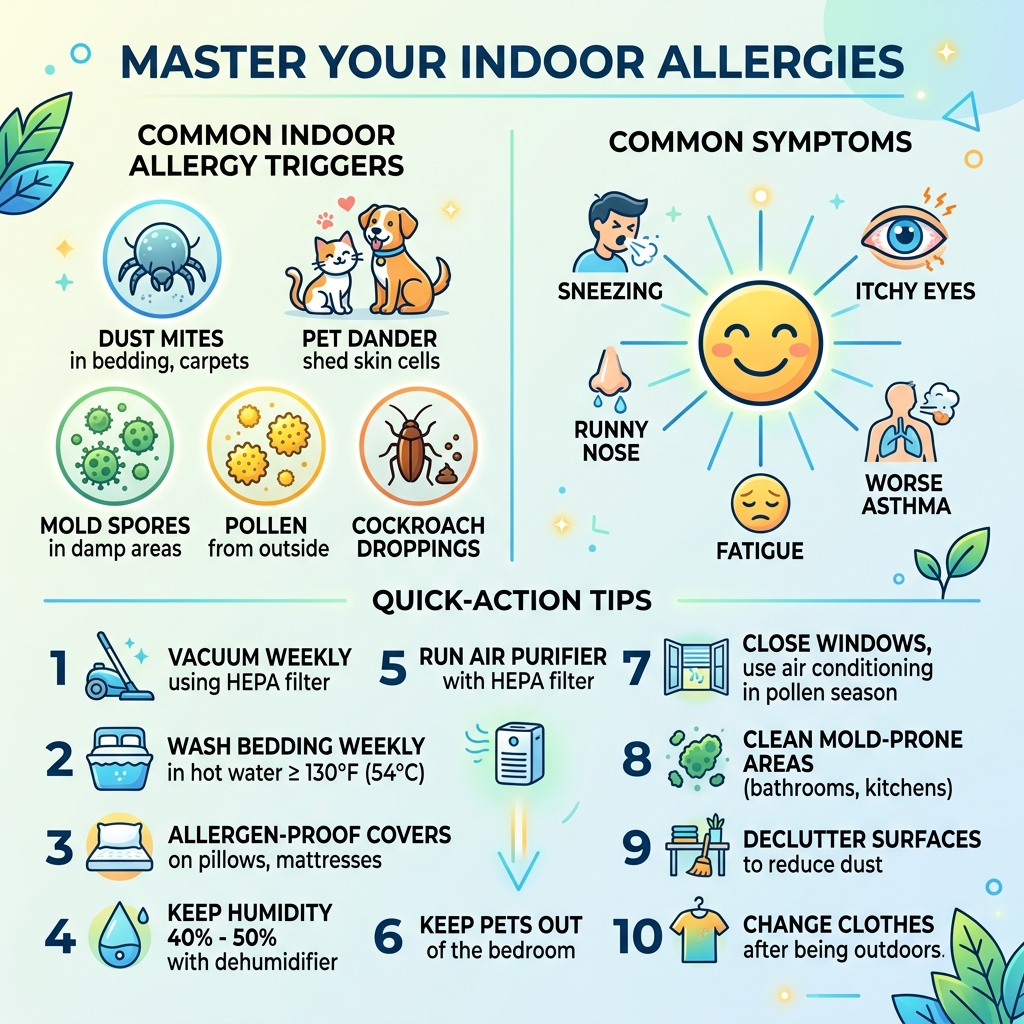
Learning how to reduce allergies at home can make a real difference for your family’s health and comfort. Here are the most effective steps you can take right now:
- Vacuum weekly using a HEPA filter vacuum
- Wash bedding weekly in water at least 130°F (54°C)
- Use allergen-proof covers on pillows and mattresses
- Keep humidity between 40% and 50% with a dehumidifier
- Run an air purifier with a HEPA filter in main living areas
- Keep pets out of the bedroom to limit dander exposure
- Close windows during pollen season and use air conditioning
- Clean mold-prone areas like bathrooms and kitchens regularly
- Declutter surfaces to reduce dust buildup
- Change clothes after being outdoors to avoid bringing pollen inside
You might think allergies are mostly an outdoor problem. But the truth is, your home could be the biggest source of your symptoms.
Eight out of 10 people in the United States are exposed to dust mites. Six out of 10 are exposed to cat or dog dander. And here’s a surprising fact: 60% of household dust actually comes from outdoors — tracked in on shoes, clothes, and through open windows.
Common indoor allergens include:
- Dust mites — tiny bugs living in bedding, carpets, and upholstered furniture
- Pet dander — shed skin cells from cats, dogs, and other animals
- Mold spores — thriving in damp areas like bathrooms and basements
- Pollen — carried inside from the outdoors
- Cockroach droppings — a common trigger in many homes
When your body encounters these substances, your immune system can overreact — releasing chemicals that cause sneezing, itchy eyes, a runny nose, and fatigue. For some people, it can even worsen asthma.
The good news? Most indoor allergens can be significantly reduced with simple, consistent habits. You don’t need expensive treatments or a full home renovation. Small changes — the right cleaning routine, better air filtration, and smarter daily habits — can have a big impact.
Master Your Cleaning Routine to Reduce Allergies at Home
We often think of cleaning as just making things look “tidy,” but for allergy sufferers, cleaning is a form of medical prevention. To truly understand how to reduce allergies at home, we have to change the way we approach dust.
Standard dusting with a feather duster or a dry rag is often counterproductive. Why? Because it simply launches allergens into the air where you can breathe them in. Instead, we recommend “damp dusting.” By using a damp microfiber cloth, you trap the dust and allergens within the fibers of the cloth rather than spreading them around. This is a core part of the best-cleaning-routine-for-healthy-home.
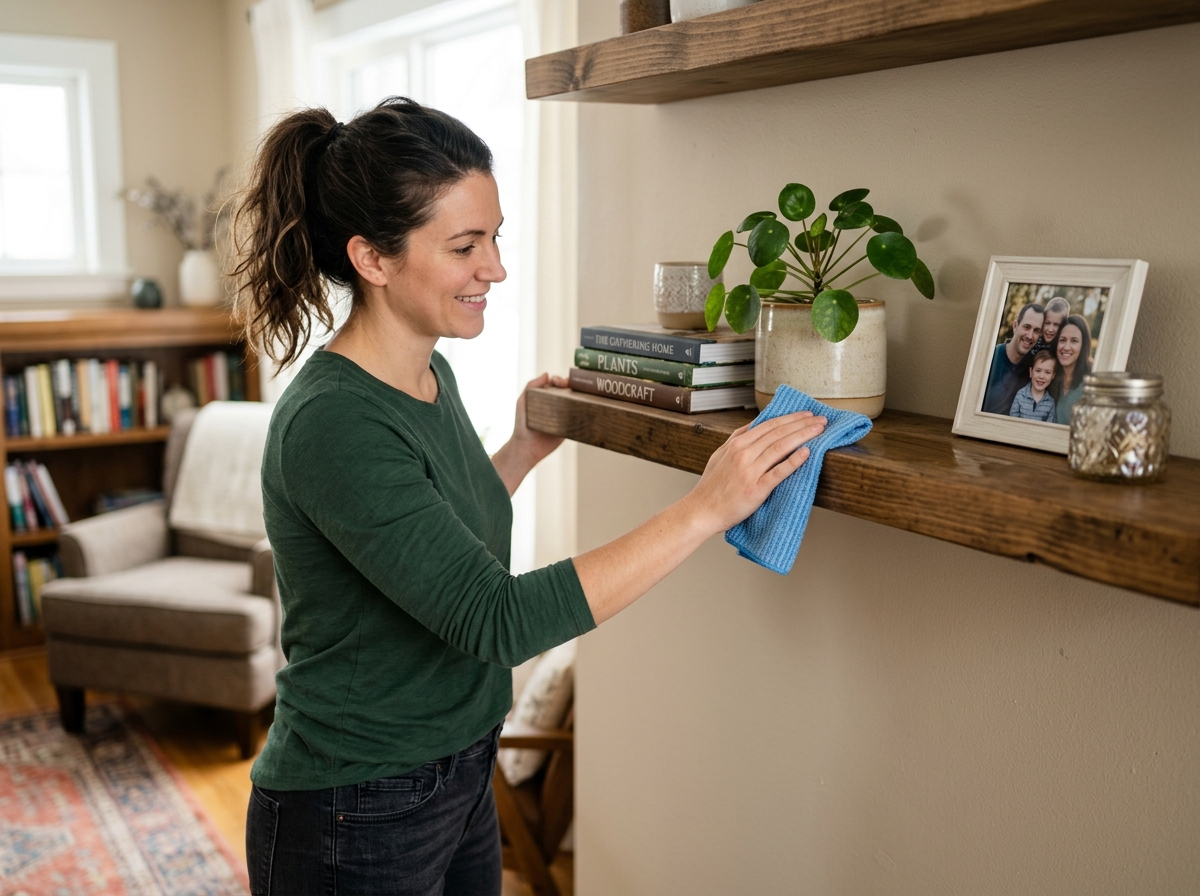
Another major hurdle is clutter. Every knickknack, stack of magazines, and stray stuffed animal on your shelves is a “dust magnet.” According to Scientific research on allergy-proofing your home, removing these items or storing them in plastic bins significantly reduces the surface area where dust mites can settle. If you want to dive deeper into effective techniques, check out our microfiber-cloth-dusting-guide.
How to Reduce Allergies at Home with Better Laundry Habits
Your bedroom is often the “allergy capital” of your house because of dust mites. These microscopic creatures feed on human skin cells and thrive in the warm, humid environment of your bed. To fight back, we need to turn up the heat.
Research shows that you must wash your bedding, including pillowcases and blankets, at least once a week in water that is 130 degrees Fahrenheit (54 C) or hotter. This is the magic temperature required to kill dust mites. If your fabric allows it, drying on a high-heat cycle is another great way to ensure they are gone.
Beyond washing, we suggest investing in zippered, allergen-proof covers for your mattresses and pillows. These create a physical barrier that prevents dust mites from colonizing your bed. While you are at it, don’t forget your gadgets! Dust settles on everything, and we have a guide for removing-dust-from-electronics to help you keep your workspace as clean as your sleep space.
Effective Vacuuming: How to Reduce Allergies at Home
If you have carpeting, vacuuming is your primary defense, but not all vacuums are created equal. A standard vacuum without proper filtration can actually exhaust fine particles back into the room.
For real vacuuming-for-allergen-reduction, you need a machine equipped with a HEPA (High-Efficiency Particulate Air) filter. These filters are designed to trap 99.97% of particles as small as 0.3 microns—including pollen and mold spores.
We recommend vacuuming at least once or twice a week. If possible, replace wall-to-wall carpeting with hard flooring like wood or tile, as these are much easier to keep allergen-free. If you must have rugs, stick to low-pile options and follow our tips for cleaning-carpets-to-reduce-allergens.
Improving Air Quality and Controlling Humidity
The air you breathe inside can be two to five times more polluted than outdoor air. To tackle this, we look at two main factors: filtration and humidity.
High-quality air purifiers are a game-changer. When selecting one, look for the Clean Air Delivery Rate (CADR) to ensure it is powerful enough for your room size. A unit that combines a HEPA filter with an activated carbon filter can remove both physical particles and irritating odors or gases. You can find more about compact-air-purifiers-that-tackle-allergies to fit smaller spaces like bedrooms.
Humidity control is equally vital. Dust mites and mold love moisture. Experts suggest keeping your home’s humidity level between 40% and 50%. If your home is too damp, use a dehumidifier, especially in basements or bathrooms. Conversely, avoid using humidifiers, as they can inadvertently create a breeding ground for mold if not cleaned daily.
For those with central air, your HVAC system is a giant air scrubber—if you use the right filters. We suggest using filters with a MERV 13 rating or higher and replacing them every 30 to 60 days. For more on this, see our dusting-tips-for-better-air-quality and expert advice on controlling indoor allergens.
| Filter Type | Efficiency | Best For |
|---|---|---|
| Standard HVAC Filter | Low (MERV 1-4) | Protecting the HVAC motor only |
| MERV 13 Filter | High | Capturing bacteria, smoke, and allergens |
| HEPA Filter | 99.97% | Capturing the smallest particles (pollen, dander) |
Managing Pet Dander and Preventing Mold Growth
We love our furry friends, but six out of 10 people are sensitive to their dander. It is important to remember that “hypoallergenic” pets don’t truly exist; the allergy is caused by proteins in the animal’s skin cells, saliva, and urine, not just the fur.
To manage this, we suggest creating “pet-free zones,” specifically the bedroom. Keeping the door closed prevents dander from embedding itself in your bedding. Regular bathing (once a week) can also help wash away loose dander and outdoor pollen that gets stuck in their coats. Check out our cleaning-tips-for-pet-owners for a full strategy.
Mold is another silent trigger. It thrives in any area with standing water or high condensation. To prevent growth, always use exhaust fans in the bathroom and kitchen. If you find small patches of mold, you can clean them with a 5% chlorine bleach solution or vinegar, but be sure to wear a mask and gloves.
For larger issues, you’ll want to explore effective-techniques-for-mold-removal and ensure all plumbing leaks are repaired immediately. Protecting your environment is a key part of guarding-your-childs-health-understanding-indoor-air-quality-hazards.
Frequently Asked Questions about Indoor Allergens
What are the most common indoor allergens?
The primary culprits are dust mites, which live in fabrics; pet dander from skin and saliva; mold spores from damp areas; and cockroach droppings, which are potent triggers for asthma. Additionally, pollen is frequently brought inside from the outdoors on clothes and shoes.
How can I prevent pollen from entering my home?
The best way is to keep windows and doors closed during peak pollen seasons (usually spring and fall). Use your air conditioner on the “recirculate” setting. We also recommend removing shoes at the door and showering immediately after spending time outdoors to wash pollen off your skin and hair.
When should I see a doctor for my allergies?
You should consult an allergist or immunologist if your symptoms are persistent, interfere with your sleep or daily activities, or if you experience a chronic cough. If you notice your asthma symptoms worsening or if over-the-counter medications aren’t providing relief, a professional can help identify your specific triggers through testing.
Conclusion
At Computadora Agora, we believe that a healthy home is the foundation of a happy life. By focusing on how to reduce allergies at home through source reduction—targeting the allergens where they live rather than just masking the symptoms—you can create a sanctuary for your family.
From mastering your laundry temperature to maintaining the perfect humidity level, these small steps add up to a big difference in air quality. Consistency is key. Start with one or two changes today, like encasing your pillows or setting a weekly vacuuming schedule, and build from there. Learn more about healthy home maintenance by exploring our other guides and tips!
