
Why Your Air Purifier Needs Regular Maintenance to Keep Working
Air purifier maintenance tips are something every owner needs — because even the best unit stops working well when it’s neglected.
Here’s a quick summary of the most important maintenance tasks:
- Replace HEPA and carbon filters every 6-12 months (carbon every 3-6 months)
- Vacuum or rinse the pre-filter every 1-3 months
- Wipe down the exterior and vents every 2-4 weeks with a microfiber cloth
- Clean the air quality sensor monthly with a dry cotton swab
- Deep clean the interior every 6-12 months
- Unplug the unit before doing any cleaning
Think of your air purifier like a vacuum cleaner. You wouldn’t expect a vacuum to work well with a full, clogged bag. The same logic applies here.
A well-maintained air purifier can remove up to 92% of PM2.5 particles from your indoor air. According to the Environmental Protection Agency (EPA), indoor air can be significantly more polluted than outdoor air, making consistent upkeep essential. A neglected one? Its efficiency can drop by half in just a few months. On top of that, a clogged filter forces the motor to work harder, which can raise your electricity bill by 15-25% and shorten the unit’s lifespan by 40-60%.
The good news: most maintenance tasks take just a few minutes and require nothing more than a microfiber cloth and a vacuum. This guide walks you through everything — from quick weekly wipe-downs to annual deep cleans — so your family keeps breathing clean air without any guesswork.
Why Regular Air Purifier Maintenance Tips Matter for Your Home
We often buy air purifiers and expect them to be “set it and forget it” appliances. However, the reality is that their efficiency ratings—those impressive 99.97% capture rates—are entirely dependent on the physical state of the filters and the motor. When we talk about the science of maintaining your mini air purifier, we are really talking about fluid dynamics. An air purifier works by pulling air through dense layers of material. If those layers are blocked by a “wall” of dust, the air simply cannot pass through.
Research shows that properly maintained units can retain up to 95% of their original efficiency throughout their entire lifespan. In contrast, neglecting these devices allows PM2.5 particles (tiny pollutants that the World Health Organization identifies as a major health risk) to bypass the filtration system or remain in your room because the airflow is too weak to pull them in. Furthermore, following a strict air filter replacement schedule isn’t just about air quality; it’s about your wallet. A clogged filter creates resistance, forcing the motor to consume 15-25% more electricity just to move the same amount of air. By keeping things clean, you protect the motor from overheating and ensure you aren’t overpaying on your monthly utility bill.
Essential Air Purifier Maintenance Tips for Longevity
If you want your investment to last, longevity starts with reducing “mechanical stress.” When we look for budget-friendly air purifiers for your home, we want those units to last for years, not just one season. The primary cause of early motor failure in air purifiers is dust accumulation inside the housing.
When dust builds up on the internal fan blades or around the motor housing, it creates an imbalance. This can lead to strange rattling noises or a “labored” humming sound. By practicing consistent air purifier maintenance tips, such as vacuuming the intake grills and ensuring the area around the unit is clear of debris, you can extend the machine’s life by 2 to 3 years. Optimization is the name of the game: better airflow equals a cooler motor, which equals a longer-lasting device.
Step-by-Step Guide to Cleaning Your Unit
Cleaning your air purifier doesn’t require a degree in engineering, but it does require a bit of caution. Before you even touch the filters, safety is the priority. Always turn off the device and physically pull the plug from the wall outlet.
- Safety First: Unplug the unit. If the device has been running on high, let it sit for about 30 minutes to allow any static charge on the filters to dissipate.
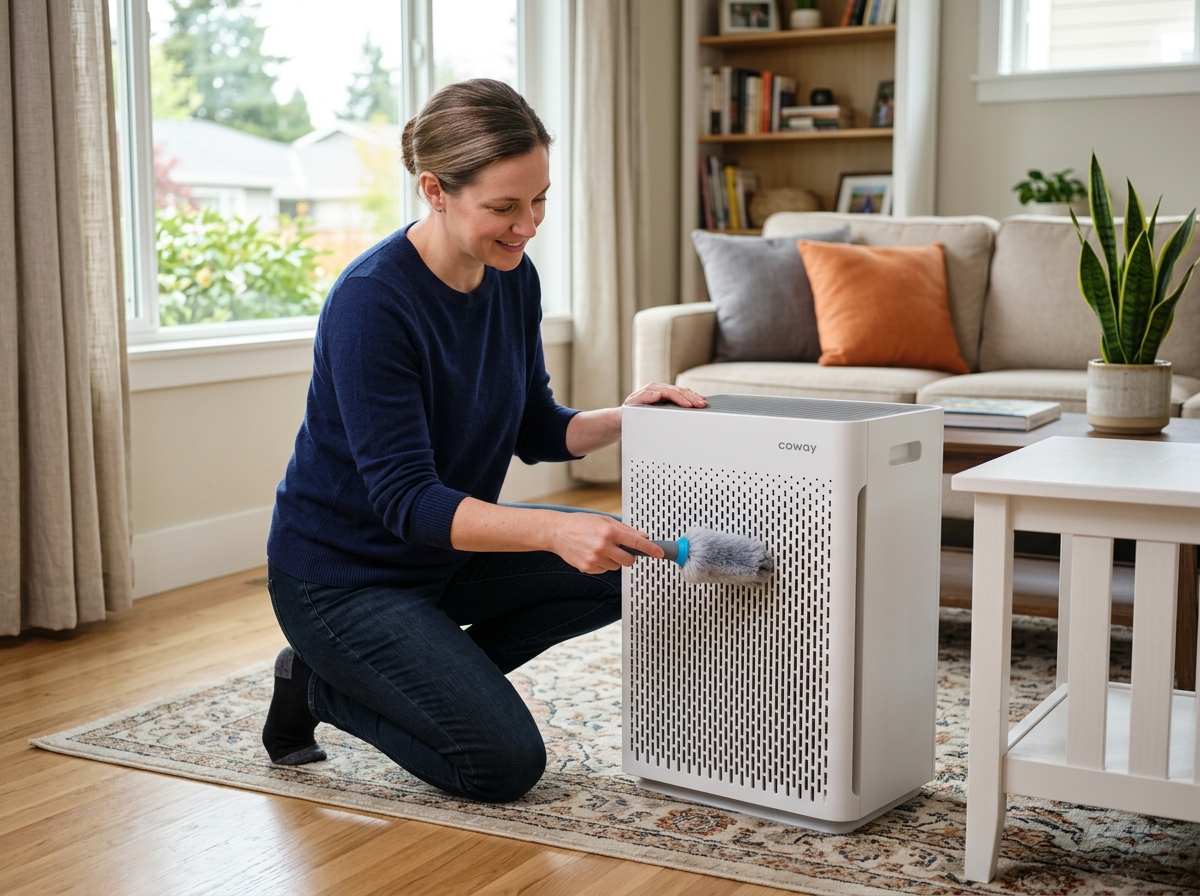
- Exterior Wipe-down: Use a dry or slightly damp microfiber cloth to wipe the outer shell. Avoid using harsh chemical sprays or window cleaners, as these can degrade the plastic or seep into the sensitive electronics.
- Vent Brushing: Dust loves to hide in the intake and outlet grills. If you have one of the top 10 air purifiers for small rooms, you’ll notice these grills are often quite fine. Use a soft-bristled brush (like a clean paintbrush or a vacuum brush attachment) to gently whisk away lint and pet hair.
- Surrounding Area: This is a pro tip many people miss—vacuum the floor and wipe the table under the air purifier. If the area around the unit is dusty, the purifier will just suck that dust right back in the moment you turn it on.
Deep Cleaning the Interior and Air Sensors
Once or twice a year, you need to go deeper than the surface. The interior of the unit can harbor “ghost dust” that bypassed the filters. Using a vacuum with a narrow crevice tool, gently suck out any debris from the internal chamber.
One of the most critical components to clean is the air quality sensor. This little “eye” tells the machine how hard to work. If the sensor is covered in dust, it might think your air is dirty when it isn’t (forcing the fan to stay on high) or think the air is clean when it’s actually smoky. As noted in our hepa air purifiers for small spaces a detailed review, sensor accuracy is what makes “Auto Mode” actually useful.
To clean it, locate the sensor door (usually on the side or back), open it, and use a dry cotton swab to gently wipe the lens. If there is stubborn grime, a tiny drop of isopropyl alcohol on the swab will do the trick—just make sure it’s completely dry before closing the door. If you are using all about ionic air purifiers for compact spaces, check for any “soot” buildup on the internal plates, as these require specific wiping to maintain their ionization charge.
Mastering Filter Care: HEPA, Carbon, and Pre-Filters
Understanding your filters is the “secret sauce” to effective air purifier maintenance tips. Most modern units use a three-stage system, and each layer has its own personality and needs.
| Filter Type | What it Does | Maintenance Action | Frequency |
|---|---|---|---|
| Pre-Filter | Captures large hair, lint, and dust bunnies. | Vacuum or wash (if permitted). | Every 2-4 weeks. |
| True HEPA | Traps 99.97% of particles down to 0.3 microns. | Never wash. Replace only. | Every 6-12 months. |
| Activated Carbon | Absorbs odors, smoke, and VOC gases. | Never wash. Replace only. | Every 3-6 months. |
When shopping for affordable and efficient air purifiers for small rooms, check if the pre-filter is “permanent” or “washable.” Washable pre-filters are a great way to save money. You can rinse them under lukewarm water with a drop of mild soap. Crucial Warning: You must let a washable filter dry for at least 24 hours before putting it back. Reinstalling a damp filter is a recipe for mold growth, which the purifier will then happily blow all over your house!
Seasonal Air Purifier Maintenance Tips for Pet Owners
If you share your home with furry friends, your maintenance schedule needs an upgrade. Pet dander and fur are “heavy” pollutants that clog pre-filters much faster than standard household dust. During shedding seasons (spring and fall), we recommend checking your pre-filter every single week.
For those using compact air purifiers that tackle allergies, seasonal changes bring different challenges. In the spring, pollen is the enemy. In the summer, wildfire smoke can saturate your carbon filter in a matter of weeks. In the winter, we tend to keep our windows closed, leading to a buildup of indoor pollutants. If you’re looking at top air purifiers for small rooms on a budget, the “cost” of the unit includes these seasonal filter swaps. If you smell a “doggy” odor coming from your purifier, it’s a sign that the carbon filter is saturated and needs to be replaced, regardless of what the indicator light says.
Troubleshooting Common Performance Issues
Sometimes, even with regular cleaning, things go wrong. Here are the most common issues and how to fix them:
- Reduced Airflow: If the fan is spinning but you don’t feel much air, the filter is likely “loaded.” Even if it looks clean on the surface, the microscopic pores could be blocked. Try replacing the filter. Also, check that you didn’t accidentally leave the plastic packaging on the filter (it happens to the best of us!).
- Strange Noises: A whistling sound usually means air is escaping around the side of a filter that isn’t seated correctly. A rattling sound usually means a large piece of debris (like a hair clip or a large clump of pet hair) has fallen into the fan blades.
- Persistent Odors: If the unit smells musty, check for moisture or mold on the filters. If it smells “sour,” the activated carbon filter has reached the end of its life.
- Indicator Light Won’t Turn Off: Most units don’t “know” you changed the filter automatically. You usually have to hold the “Filter Reset” button for 3-5 seconds to tell the machine to start a new countdown.
Optimization also depends on placement. We recommend keeping your unit at least 3 feet away from walls and furniture. This ensures it can pull air from all 360 degrees. For more on high-performance units, check out our list of top-rated compact air purifiers.
Frequently Asked Questions about Air Purifier Upkeep
Can I vacuum a HEPA filter instead of replacing it?
It is a common myth that you can “renew” a HEPA filter with a vacuum. While a vacuum can pull off the visible “fuzz” on the surface, it cannot reach the microscopic particles trapped deep within the glass fibers. In fact, the high suction of a vacuum can actually create tiny tears in the HEPA material. These microscopic holes allow pollutants to pass straight through, essentially turning your high-tech purifier into a simple fan. To maintain the 99.97% efficiency standard, replacement is the only option.
How often should I clean the air quality sensor?
We recommend a quick cleaning once a month. If you live in a high-pollution area, near a busy road, or have multiple pets, every two weeks is better. A clean sensor ensures the “Auto Mode” reacts instantly to a burnt piece of toast or a spike in pollen, keeping your air clean without wasting energy when the air is already pure.
When is it necessary to call a professional for service?
Most air purifier maintenance is DIY-friendly. However, you should call a professional or contact the manufacturer if you experience:
- Electrical Smells: A burning plastic smell from the motor.
- Grinding Noises: This indicates a bearing failure in the motor.
- Unresponsive Controls: If the touch panel or buttons stop working despite being plugged in.
- Warranty Issues: Always check your manual before disassembling the motor housing, as this can void your warranty.
Conclusion
At Computadora Agora, we believe that clean air shouldn’t be a luxury—it should be a standard. By following these air purifier maintenance tips, you aren’t just taking care of a machine; you’re investing in your long-term respiratory health and saving money on energy and repairs. A little bit of dusting and a timely filter swap go a long way in ensuring your home remains a sanctuary of fresh air.
Ready to upgrade your indoor environment? Explore our full range of high-efficiency air purifiers and find the perfect match for your space today!
