
Why a Dirty Dryer Vent Is a Hidden Hazard in Your Home
A dryer vent cleaning kit is one of the simplest tools you can own to protect your home and family. Here’s a quick look at the top-rated options to help you decide fast:
| Kit | Reach | Best For | Price Range |
|---|---|---|---|
| Holikme Dryer Vent Cleaner | 30 ft | DIY homeowners | ~$20 |
| VEVOR Duct Cleaning Brush | 40 ft | Longer vents, complex ducts | ~$22 |
| LintEater Kit | 12 ft | Basic home use | ~$34 |
| Everbilt Drill-Powered Kit | 12 ft | Quick, drill-powered cleaning | ~$28 |
| Vent Vision All-In-One Kit | 40 ft | Professional-grade DIY | ~$685 |
Most homeowners do just fine with a 30- to 40-foot flexible rod kit in the $20–$50 range.
Lint is sneaky. It slips past your lint screen after every load and slowly builds up deep inside your dryer duct. You can’t see it. You might not notice it — until your clothes take forever to dry, your energy bill creeps up, or worse.
Lint buildup is the leading cause of clothes dryer fires. The U.S. Fire Administration backs this up, and the National Fire Protection Association (NFPA) recommends inspecting and cleaning dryer vents at least once a year.
The good news? You don’t need to hire anyone. A quality dryer vent cleaning kit costs as little as $20 and can save you around $150 per cleaning compared to a professional service.
What is a Dryer Vent Cleaning Kit?
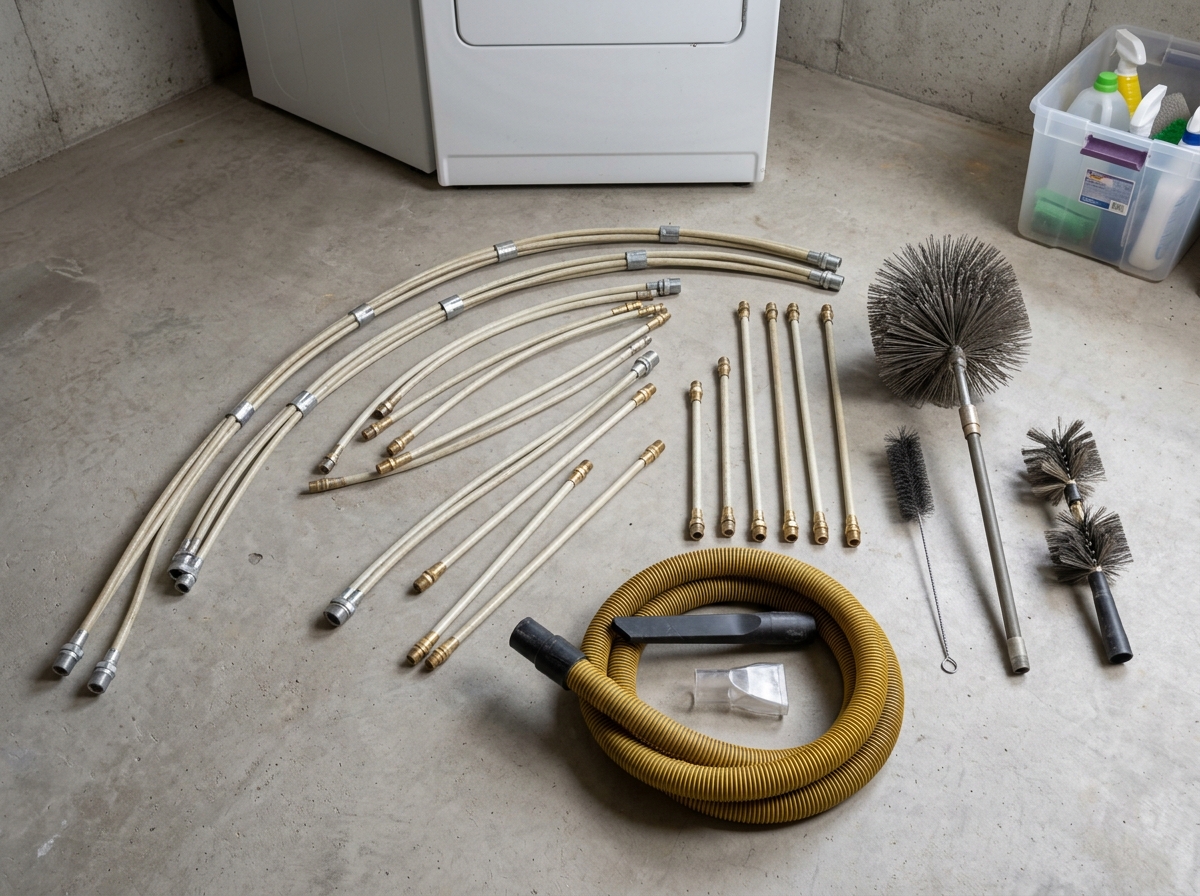
If you’ve never seen one before, a dryer vent cleaning kit might look like a high-tech version of a chimney sweep’s gear, just miniaturized for your laundry room. At its core, it is a system of specialized tools designed to travel the entire length of your dryer’s exhaust duct to dislodge packed-in lint and debris.
When we look at what’s inside a typical box, we usually find a few key components:
- Flexible Rods: These are the “spine” of the kit. Usually made of reinforced nylon or high-strength copolymer, these rods are designed to be thin enough to bend around tight corners but strong enough not to snap. They typically come in 2-foot or 3-foot sections that screw together to reach deep into your walls.
- The 4-Inch Brush: Most residential dryer ducts are 4 inches in diameter. The brush head features stiff, tightly packed bristles that scrape the walls of the pipe without damaging the metal or foil.
- Drill Adapter: This little piece of metal allows you to connect the rods to a standard power drill. The drill provides the rotational force needed to “scour” the lint loose.
- Lint Trap Brush: Many kits include a long, thin, flexible brush (often around 2.5 inches wide) specifically for cleaning the area right under your dryer’s removable lint filter.
- Vacuum or Blower Attachment: These adapters help you hook up a shop vac to the vent opening so you can suck out the lint as the brush breaks it free.
A quality kit relies on threaded connections or locking pins. This is vital because the last thing we want is for the brush to unscrew while it’s 20 feet inside a wall! High-durability materials like reinforced nylon ensure that the rods can withstand the torque of a drill without kinking or breaking.
Choosing the Right dryer vent cleaning kit for Your Home
Not all homes are built the same, which means the kit your neighbor uses might not be long enough for your house. Before you buy, you need to know how your dryer vent is routed. Does it go straight through the wall to the backyard, or does it travel up through the attic to the roof?
Length and Reach
Most DIY kits, like the popular Holikme models, offer a 30-foot reach. This is usually plenty for most suburban homes. However, if you live in a multi-story building or have a complex laundry setup, you might need a 40-foot reach or even longer. Some professional-grade cables even extend to 50 feet.
Material Matters: Nylon vs. Copolymer
Standard DIY rods are made of nylon. They are very flexible, which is great for 90-degree turns. However, some premium kits use copolymer, which is marketed as having superior resistance to twisting and breakage. If you have a very long vent with many elbows, investing in a more durable material can prevent a “stuck rod” disaster.
Feature Comparison Table
To help you narrow it down, we’ve summarized the capabilities of common kit types:
| Feature | Basic DIY Kit | Extended Reach Kit | Professional-Grade Kit |
|---|---|---|---|
| Max Length | 12–20 feet | 30–40 feet | 35–50+ feet |
| Material | Standard Nylon | Reinforced Nylon | Copolymer or Steel Cable |
| Power Source | Manual or Drill | Drill-Powered | High-Torque Drill/Rotary |
| Best Use | Apartments/Small Homes | Standard Houses | Commercial/Contractor Use |
If you are looking for more Home Ventilation Cleaning Tips, the goal is always to maintain a clear path for air to escape.
How to Operate Drill-Powered Cleaning Tools
Using a dryer vent cleaning kit with a drill is the most effective way to get professional results. The spinning action of the brush creates a “centrifugal” cleaning effect that reaches every nook and cranny of the duct.
However, power tools require a bit of finesse. Here are the golden rules for using a drill with your cleaning rods:
- Clockwise Only: This is the most important rule. Most rods screw together. If you put your drill in reverse, the rods will unscrew inside the vent. Always keep the drill moving in a clockwise direction.
- Low RPM Settings: You aren’t trying to drill a hole through the wall. Use a low speed (Speed 1 on most drills) and a low clutch setting (around 4 or under). This prevents the rods from whipping around too violently if they hit a snag.
- Incremental Feeding: Don’t try to shove 20 feet of rod in at once. Connect one or two sections, run the drill while moving the brush back and forth, and then add the next section.
- Airflow Management: It’s often helpful to have the dryer running on a “no heat” or “air fluff” cycle while you clean from the outside. The air blowing out helps push the loosened lint toward you.
For a deeper dive into maintaining your home’s air quality, check out our guide on DIY Home Cleaning for Better Air.
Step-by-Step Guide for Your dryer vent cleaning kit
Ready to tackle the task? Here is our simplified workflow for a successful cleaning:
- Preparation: Unplug your dryer and pull it away from the wall. Disconnect the flexible transition duct.
- Initial Clean: Use your vacuum or the lint trap brush to clear out the loose lint from the back of the dryer and the immediate opening of the wall duct.
- Rod Assembly: Screw the brush head onto the first rod. Hand-tighten all connections. Some users find that a small piece of electrical tape over the joints adds extra security.
- Brush Insertion: Insert the brush into the duct. If using a drill, start it at a slow speed. Move the brush in and out in small increments as you feed it further in.
- Exterior Access: If possible, go outside and remove the vent cover. It is often easier to pull the lint out from the exterior exit point.
- Final Air Fluff: Once you’ve brushed the entire length, reattach the dryer and run a 10-minute air fluff cycle to blow out any remaining dust.
Avoiding Common Mistakes with a dryer vent cleaning kit
Even the best dryer vent cleaning kit can cause headaches if used incorrectly. One of the most common issues is rod detachment. This usually happens when the user accidentally hits the “reverse” switch on their drill. If this happens, don’t panic! You may be able to use a retrieval coil (included in some high-end kits) to fish the rod back out.
Another issue is over-forcing bends. If the brush hits a 90-degree turn and won’t budge, don’t just push harder. Instead, rotate the rods manually by hand to feel the curve, then engage the drill slowly once you’ve cleared the corner.
If your rods feel too stiff, a pro tip is to gently warm them up. Nylon can be made more pliable if it’s kept in a warm room before use. This helps in Preventing Indoor Pollution: Simple and Effective Tips by ensuring the vent is truly clean and not just partially cleared.
Cost and Efficiency Benefits of DIY Dryer Vent Cleaning
Is it worth doing yourself? Let’s look at the numbers. A professional dryer vent cleaning service typically costs between $125 and $175. Meanwhile, a top-rated dryer vent cleaning kit like the Holikme 30-foot version costs about $20.
By doing it yourself, you are essentially paying for the kit in the first 15 minutes of use. But the savings don’t stop there.
- Energy Bills: A clogged vent forces your dryer to run longer. If a load that used to take 45 minutes now takes 90, you are doubling the energy cost of every load of laundry.
- Appliance Longevity: Overheating is the number one killer of dryer heating elements and motors. Keeping the vent clear ensures your appliance lasts its full expected lifespan.
- Fire Prevention: You can’t put a price on safety. With thousands of dryer fires reported annually, the peace of mind provided by a $20 tool is immeasurable.
If you’re wondering how this fits into your broader home maintenance, you might also want to check How Often to Clean AC Vents to keep your entire HVAC system running smoothly.
Frequently Asked Questions about Dryer Maintenance
How often should I use a cleaning kit?
For most households, once a year is the gold standard. However, if you have a large family, several pets, or do more than five loads of laundry a week, we recommend a deep clean every six months.
Can these kits navigate 90-degree turns?
Yes! Most quality kits are designed with flexible nylon or copolymer rods that can bend up to 90 degrees. The key is to feed the rods slowly and let the rotation of the drill help the brush head “climb” through the turn.
What are the signs of a dangerously clogged vent?
Keep an eye out for these red flags:
- Clothes are still damp after a full cycle.
- The dryer feels unusually hot to the touch.
- You notice a musty smell or a burning odor in the laundry room.
- The exterior vent flap doesn’t open when the dryer is running.
- Large amounts of lint are accumulating around the dryer’s base.
Conclusion
At Computadora Agora, we believe that a healthy home starts with simple, consistent maintenance. Investing in a dryer vent cleaning kit isn’t just about making your laundry dry faster—it’s about protecting your home from fire hazards and keeping your energy costs down.
Whether you choose a budget-friendly 30-foot kit or a professional-grade rotary system, the most important step is simply getting started. Make vent cleaning a part of your Best Cleaning Routine for Healthy Home and enjoy the peace of mind that comes with a clear exhaust system.
For more expert advice on keeping your living space in top shape, explore More cleaning tips and guides on our blog!
