
Pollen in Your Home Is Making You Sick — Here’s How to Fix It
How to remove pollen from home is simpler than most people think. Here’s a quick overview of the most effective steps:
- Keep windows and doors closed during high pollen seasons
- Vacuum weekly using a HEPA-filter vacuum
- Dust with a damp microfiber cloth — never dry dust
- Wash bedding weekly in hot water (130°F or hotter)
- Replace HVAC filters every 1–3 months
- Remove shoes at the door and change clothes after being outside
- Bathe pets weekly during peak pollen season
- Run a HEPA air purifier in your bedroom and main living areas
Every spring, millions of people start sneezing — even inside their own homes. That’s because pollen doesn’t stay outside.
It drifts in through open windows, hitches a ride on your shoes and clothes, clings to your pet’s fur, and even circulates through your HVAC system. Once inside, it settles on every surface: floors, furniture, bedding, and curtains.
Pollen allergies affect up to 30% of adults and 40% of children in the U.S. For many of them, home is supposed to be a refuge — but without the right cleaning habits, it becomes just another source of symptoms like sneezing, itchy eyes, and congestion.
The good news? You don’t need expensive professional services to get real relief. A few consistent habits and the right tools make a big difference.

Why You Must Know How to Remove Pollen From Home
If you’ve ever felt like you’re coming down with a cold the moment you step into your living room, you aren’t alone. Understanding how to remove pollen from home is vital because these microscopic grains don’t just sit there; they actively trigger immune responses that can leave you exhausted and uncomfortable.
Pollen grains typically range from 10 to 100 micrometers in size. To put that in perspective, a human hair is about 70 micrometers wide. These tiny particles are small enough to be inhaled deep into the lungs, making them potent asthma triggers. When pollen enters your home, it mixes with household dust to form compounds that can linger much longer than they would outdoors.
According to the Mayo Clinic, allergy-proofing your home is one of the most effective ways to manage seasonal symptoms. Without intervention, surface allergens become airborne every time you sit on a couch or walk across a carpet. This constant agitation means you are breathing in triggers 24/7. You can learn more about the unseen challenges of dust and allergens in your apartment to see why indoor air quality is often worse than the air outside.
Step-by-Step Cleaning Strategies for Pollen Removal
Removing pollen isn’t about a single “magic” cleaning product; it’s about a systematic approach. If you just grab a feather duster and start waving it around, you aren’t cleaning—you’re just helping the pollen relocate to your lungs.
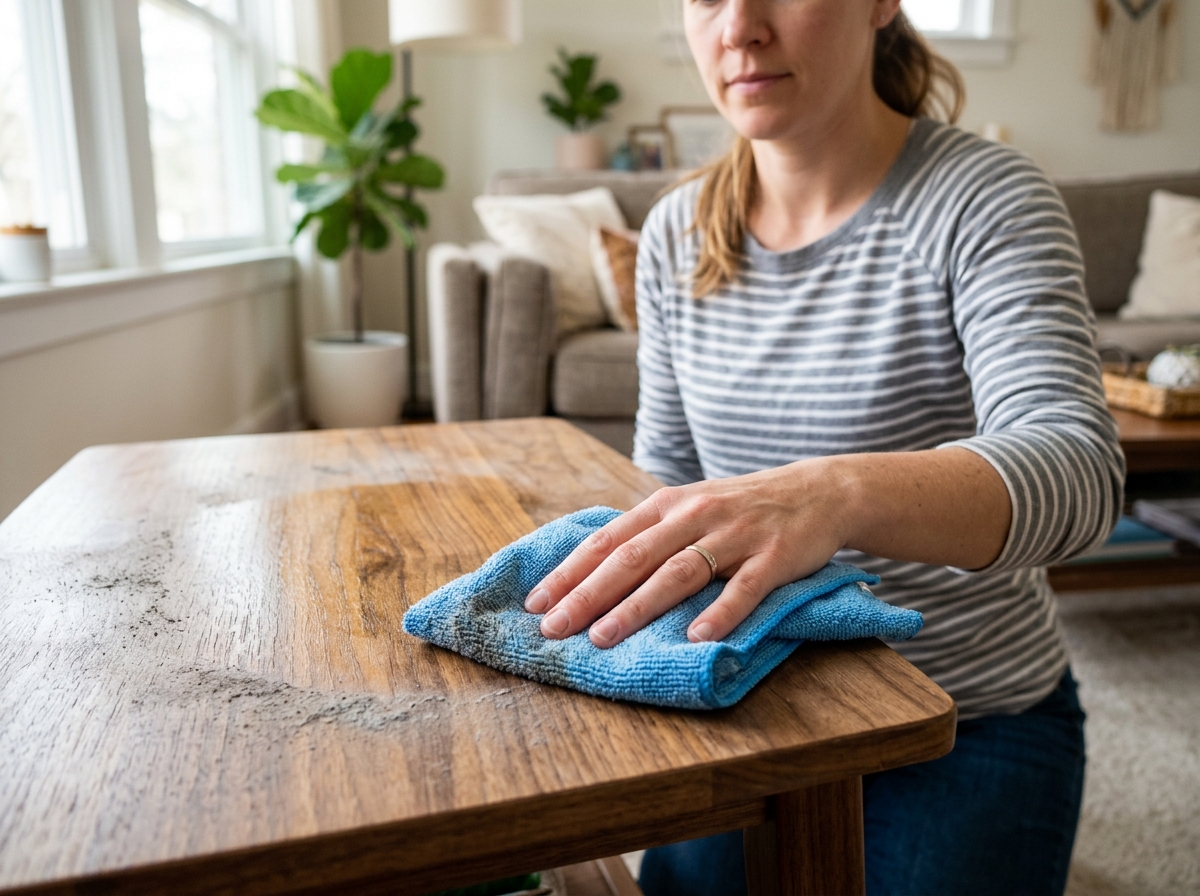
The golden rule of pollen removal is High-to-Low Dusting. Start with ceiling fans, the tops of bookshelves, and window treatments, then work your way down to the baseboards and floors. This ensures that any particles knocked loose during the process eventually settle on the floor where they can be vacuumed up.
Essential Pollen Cleaning Tools:
- Microfiber Cloths: These are superior because the fibers create a static charge that “grabs” pollen rather than pushing it around.
- HEPA Vacuum: Standard vacuums often exhaust small particles back into the room. A HEPA filter is a must.
- Distilled Water or Vinegar: For damp-wiping surfaces.
- Squeegee: For window cleaning.
- Mask and Gloves: If you are highly sensitive, wear protection while cleaning to avoid a “dust-up” of symptoms.
For a deeper dive into why the cloth you choose matters, check out our microfiber cloth dusting guide.
How to remove pollen from home windows and screens
Windows and screens are the “front lines” of the battle. During peak season, your screens act like a giant pollen filter, trapping yellow dust in the mesh. When the wind blows, that dust is pushed right into your home.
To clean them effectively:
- Vacuum first: Use a brush attachment on your vacuum to suck loose pollen off the screens and sills while they are dry.
- The Vinegar Solution: Mix equal parts water and white vinegar with a drop of dish soap. Vinegar is excellent for cutting through the sticky resins found in some tree pollens.
- Scrub the Screens: If possible, remove the screens and scrub them with a soft brush and the vinegar solution. Rinse with a hose and let them air-dry completely before reinstalling.
- The Squeegee Technique: For the glass, apply your cleaning solution and use a squeegee in a single, smooth motion to prevent streaks and ensure all residue is removed.
How to remove pollen from home floors and carpets
Carpets are essentially giant filters that trap every particle that enters your home. While this keeps the air cleaner temporarily, those particles are released every time someone walks by.
We recommend vacuuming at least once or twice a week during high pollen seasons. The key is to use a vacuum with a certified HEPA filter, which is designed to trap 99.97% of all particles 0.3 microns or larger.
Pro Tip: Don’t rush! To truly extract pollen from deep within carpet fibers, you need to make slow, deliberate passes. Go over high-traffic areas in multiple directions (like a North-South, then East-West pattern). If you have hard floors, avoid dry sweeping with a broom, as this just launches pollen back into the air. Instead, use a damp microfiber mop. You can find more detailed advice on cleaning carpets to reduce allergens on our blog.
Cleaning bedding and fabrics
Your bedroom should be your sanctuary, but it’s often where pollen hitches a ride on your hair and skin, transferring directly to your pillow.
- The 130°F Rule: Wash your sheets, pillowcases, and blankets at least once a week in water that is 130°F (54°C) or hotter. This temperature is necessary to neutralize allergens and kill any dust mites that might be exacerbating your symptoms.
- Dry Smarter: Never hang your laundry outside to dry during pollen season. Your clean sheets will act like a pollen magnet. Use a hot dryer cycle instead.
- Allergen-Proof Covers: Invest in zippered, allergen-resistant covers for your mattress and pillows. These create a barrier that prevents pollen from settling into the porous material of your bed.
Managing Airborne Pollen with Filtration and HVAC
Even with the best cleaning routine, some pollen will remain airborne. This is where technology becomes our best friend.
HEPA vs. Standard Filters
| Filter Type | Efficiency | Best For |
|---|---|---|
| Standard (Fiberglass) | Low | Large dust clumps/protecting the machine |
| Pleated (High MERV) | Medium-High | Dust, some mold, some pollen |
| HEPA Filter | 99.97% | Pollen, dander, smoke, bacteria |
Air purifiers with Certified Asthma & Allergy Friendly® filters can filter almost 98% of allergen particles in the air. For the best results, place a purifier in the rooms where you spend the most time, especially the bedroom. Check out our guide on compact air purifiers that tackle allergies to find the right fit for your space.
Optimizing HVAC systems
Your home’s heating and cooling system is the “lungs” of your house. If the filters are dirty, it’s just circulating pollen from room to room.
- MERV Ratings: Look for filters with a MERV rating of 11 to 13. These are efficient enough to trap pollen without putting too much strain on your system’s motor.
- Monthly Replacement: During peak allergy season, small-particle filters in central systems should be checked and often replaced every 30 days.
- Recirculate Mode: On high pollen days, set your AC to “recirculate” so it isn’t pulling in fresh (pollen-heavy) air from the outside.
- Seal the Gaps: Ensure there are no leaks in your ductwork or around window AC units where unfiltered air could leak in.
For more maintenance ideas, see our dusting tips for better air quality.
Humidity and air quality
While we are focusing on pollen, we can’t ignore humidity. The ideal indoor humidity level for allergy sufferers is between 40% and 50%.
Why does this matter for pollen? If your home is too humid (over 50%), you invite dust mites and mold to join the party, creating a “cocktail” of allergens that makes it impossible to breathe easy. Conversely, if the air is too dry, your nasal passages become irritated, making you more sensitive to the pollen that is there. Use a dehumidifier in damp basements and a hygrometer to monitor levels.
Proactive Habits to Keep Pollen Out
The best way to remove pollen is to stop it from entering in the first place. Think of your home as a “clean zone” and your entryway as a decontamination chamber.
- The Shoes-Off Policy: Shoes are “Uber drivers for allergens.” They pick up pollen from the grass and sidewalk and deposit it deep into your carpets. Establish a strict no-shoes policy and store footwear in a cubby near the door.
- Clothing Changes: If you’ve been gardening or walking in a park, your clothes are covered in pollen. Change your clothes as soon as you get home and put the “outdoor” clothes straight into the wash.
- The “Nightly Shower” Habit: Pollen sticks to your hair and skin. If you don’t shower before bed, you are essentially rubbing pollen into your pillowcase all night long.
- Entryway Management: Use double doormats—one outside and one inside—to trap as much debris as possible. Wash these mats frequently.
Managing pets and outdoor gear
Our furry friends are unfortunately excellent at bringing the outdoors in. Their fur acts like a specialized pollen-trapping brush.
- Wipe Paws: Keep a damp cloth or pet wipes by the door. Every time your dog comes in from a walk, wipe their paws and undercarriage.
- Weekly Bathing: Bathing pets weekly can significantly reduce the amount of pollen (and dander) they spread. If you can’t do a full bath, a thorough brushing outdoors helps.
- Vacuuming for Pets: If you have pets, you need to be even more diligent with your HEPA vacuum. We’ve compiled specific vacuuming tips for allergen reduction that are perfect for pet owners.
- Garage Parking: If you have a garage, use it. Parking outside allows pollen to coat your car. When you turn on your car’s vents, that pollen is sucked into the cabin and eventually follows you into the house.
- Patio Furniture: Clean your outdoor furniture with soap and water regularly. Pollen settles on cushions and can be blown inside through open doors or carried in on your own clothes.
Frequently Asked Questions and Final Thoughts
How often should I clean to effectively manage pollen?
During peak pollen season (which varies by region but usually hits hardest in spring and late summer), a weekly deep clean is the baseline. However, high-touch surfaces like dining tables, kitchen counters, and window sills should be wiped with a damp microfiber cloth daily. If you notice a yellow film on surfaces, that’s your signal to clean immediately.
What is the best way to stop pollen from entering?
The single most effective step is keeping your windows and doors closed. We know—it’s tempting to let in the “fresh” spring air, but that air is loaded with triggers. Use weather stripping to seal any gaps around door frames and windows. This not only keeps pollen out but also improves your home’s energy efficiency.
Can indoor plants help with pollen allergies?
This is a bit of a double-edged sword. Some plants are excellent for air purification and can help remove VOCs and some particulates. If you’re looking for natural help, check out our lists of the best small air-purifying plants and low-maintenance air-purifying plants.
However, be careful:
- Soil Mold: Overwatering indoor plants can lead to mold growth in the soil, which triggers allergies.
- Aquarium Gravel: A pro tip is to spread a layer of aquarium gravel over the soil to contain mold spores.
- Avoid Flowering Plants: If you are allergic to pollen, avoid bringing high-pollen flowers (like lilies or daisies) inside.
Common Mistakes to Avoid
- Dry Dusting: Using a feather duster or dry cloth just stirs pollen up. Always use moisture.
- Using an Old Vacuum: If your vacuum smells “dusty” when you turn it on, it’s leaking allergens.
- Ignoring the “Hidden” Spots: Baseboards, the tops of door frames, and vertical blinds are often overlooked but hold massive amounts of pollen.
- Opening Windows to “Air Out” the House: During pollen season, this does the exact opposite of what you want.
When to Consider Professional Services
While DIY methods are highly effective, you might consider professional carpet cleaning or HVAC duct cleaning if:
- Your symptoms remain severe despite a strict cleaning routine.
- You’ve just moved into a home where the previous owners had pets or didn’t maintain the HVAC.
- You have wall-to-wall carpeting that hasn’t been deep-cleaned in over a year.
Conclusion
Learning how to remove pollen from home is a journey, not a one-time event. By combining proactive habits—like leaving your shoes at the door—with the right tools like HEPA filters and microfiber cloths, you can turn your home back into the safe haven it’s meant to be.
You don’t have to do everything at once. Start by keeping the windows closed and washing your bedding in hot water this week. Small changes lead to big relief.
Ready to take your home’s air quality to the next level? Start your journey to a cleaner home today with Computadora Agora for more expert tips and guides!
