
Your Home Air May Be More Polluted Than You Think
Air purifier indoor plants for home are one of the simplest, most affordable ways to fight back against poor indoor air quality.
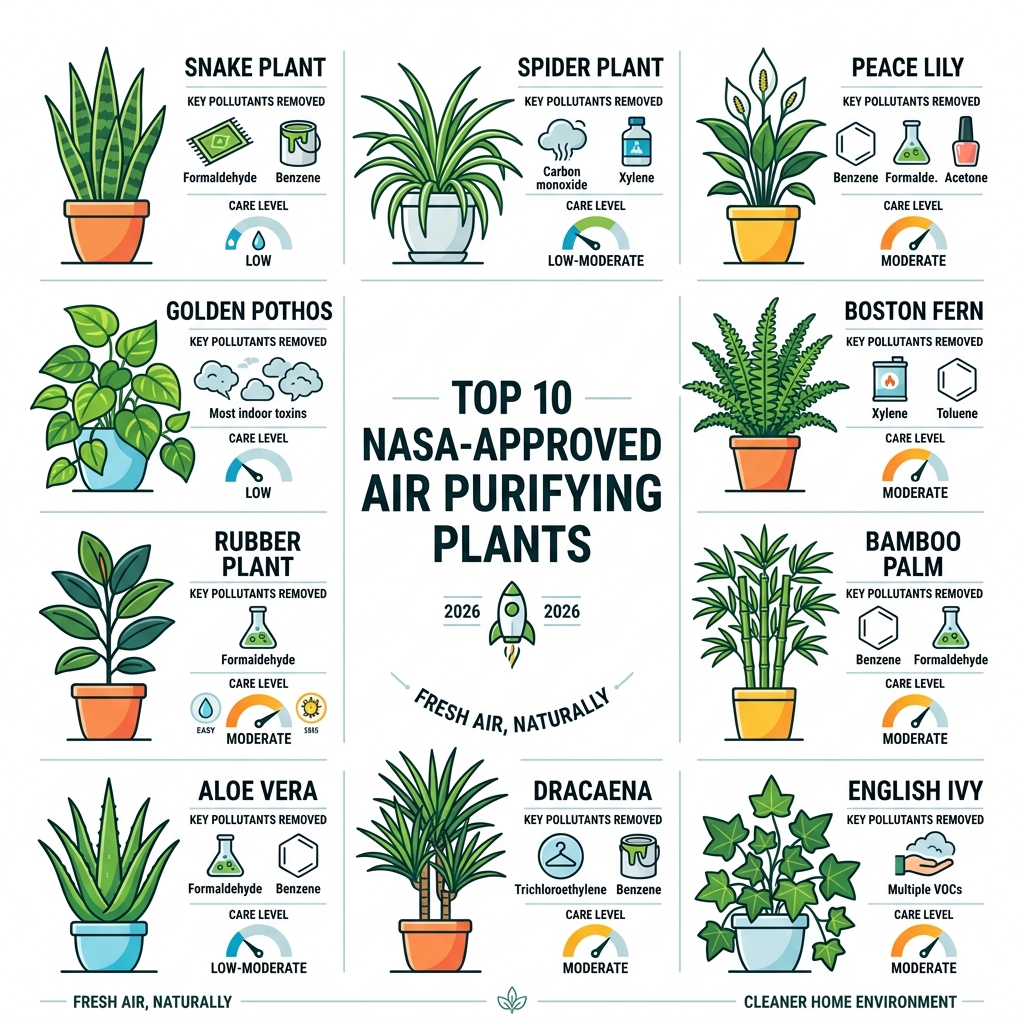
Here are the top air-purifying indoor plants, backed by NASA research:
| Plant | Key Pollutants Removed | Light Needs |
|---|---|---|
| Snake Plant | Formaldehyde, benzene | Low to bright indirect |
| Spider Plant | Carbon monoxide, xylene | Moderate indirect |
| Peace Lily | Benzene, formaldehyde, acetone | Low to moderate |
| Golden Pothos | Most indoor toxins | Low to moderate |
| Boston Fern | Xylene, toluene, benzene | Bright indirect |
| Rubber Plant | Formaldehyde | Bright filtered |
| Bamboo Palm | Benzene, formaldehyde | Bright indirect |
| Aloe Vera | Formaldehyde, benzene | Bright |
| Dracaena | Trichloroethylene, benzene | Low to moderate |
| English Ivy | Multiple VOCs | Moderate |
The air inside your home can be 2 to 5 times more polluted than the air outside. And since the average person breathes in about 6 liters of air per minute, even at rest, that adds up fast.
The sources of that pollution are everywhere. Cleaning products, paint, furniture, mold, and even cooking fumes all release toxic compounds into the air you and your family breathe every day.
In 1989, NASA scientist Bill Wolverton published a landmark study showing that common houseplants could absorb harmful chemicals like formaldehyde, benzene, and trichloroethylene. The study was originally designed to solve air quality problems in sealed space stations — but the findings turned out to be just as relevant for everyday homes suffering from what researchers call Sick Building Syndrome.
The good news? You don’t need a complicated system or expensive equipment to start cleaning your indoor air naturally.
How Air Purifier Indoor Plants for Home Actually Work
It might seem like magic, but the way a plant cleans the air is a fascinating biological process. It isn’t just about the leaves; it’s a team effort between the plant and the soil it lives in.
The primary way plants “breathe” is through tiny pores on their leaves called stomata. During photosynthesis, plants take in carbon dioxide and release oxygen. However, as they pull in air, they also absorb Volatile Organic Compounds (VOCs). These VOCs include nasty toxins like formaldehyde (found in carpets and upholstery), benzene (found in plastics and synthetic fibers), and xylene (found in paints and adhesives).
Once these toxins are absorbed, the plant moves them down to its root system. This is where the real heavy lifting happens. Microbes living in the soil—specifically around the roots—break down these complex pollutants into harmless compounds that the plant can actually use for food. This process is known as phytoremediation.
According to our Indoor Plants and Air Quality: A Comprehensive Guide, this natural filtration system is incredibly efficient at targeting specific household threats. For a deeper dive into the science, you can check out our article on Plants That Remove Toxins From Air.
Top 10 NASA-Tested Air Purifying Plants
When NASA conducted its famous Clean Air Study, they weren’t just looking for pretty greenery. They were looking for “botanical guardians” that could survive in harsh environments while scrubbing the air clean.
While many plants offer benefits, some are simply more “hardworking” than others. Below is a breakdown of the heavy hitters that passed the NASA test with flying colors.
| Plant Species | Primary Toxins Removed | Light Requirements | Care Level |
|---|---|---|---|
| Snake Plant | Benzene, Formaldehyde, Trichloroethylene | Low to Bright | Easy |
| Spider Plant | Carbon Monoxide, Formaldehyde, Xylene | Moderate | Easy |
| Peace Lily | Ammonia, Benzene, Alcohols, Acetone | Low to Medium | Moderate |
| Boston Fern | Formaldehyde, Xylene, Toluene | Bright Indirect | Moderate |
| Golden Pothos | Benzene, Formaldehyde, Carbon Monoxide | Low to Medium | Very Easy |
| Rubber Plant | Formaldehyde | Bright Filtered | Easy |
| Bamboo Palm | Benzene, Formaldehyde | Bright Indirect | Moderate |
| Aloe Vera | Benzene, Formaldehyde | Bright | Easy |
| Dracaena | Trichloroethylene, Xylene, Benzene | Low to Medium | Easy |
| English Ivy | Fecal particles, Formaldehyde | Moderate | Easy |
For more specific details on these varieties, we recommend exploring our guides on Snake Plant Benefits for Air Quality, Peace Lily Indoor Care, Aloe Vera Air Purification Benefits, and Ferns and Indoor Air Cleaning.
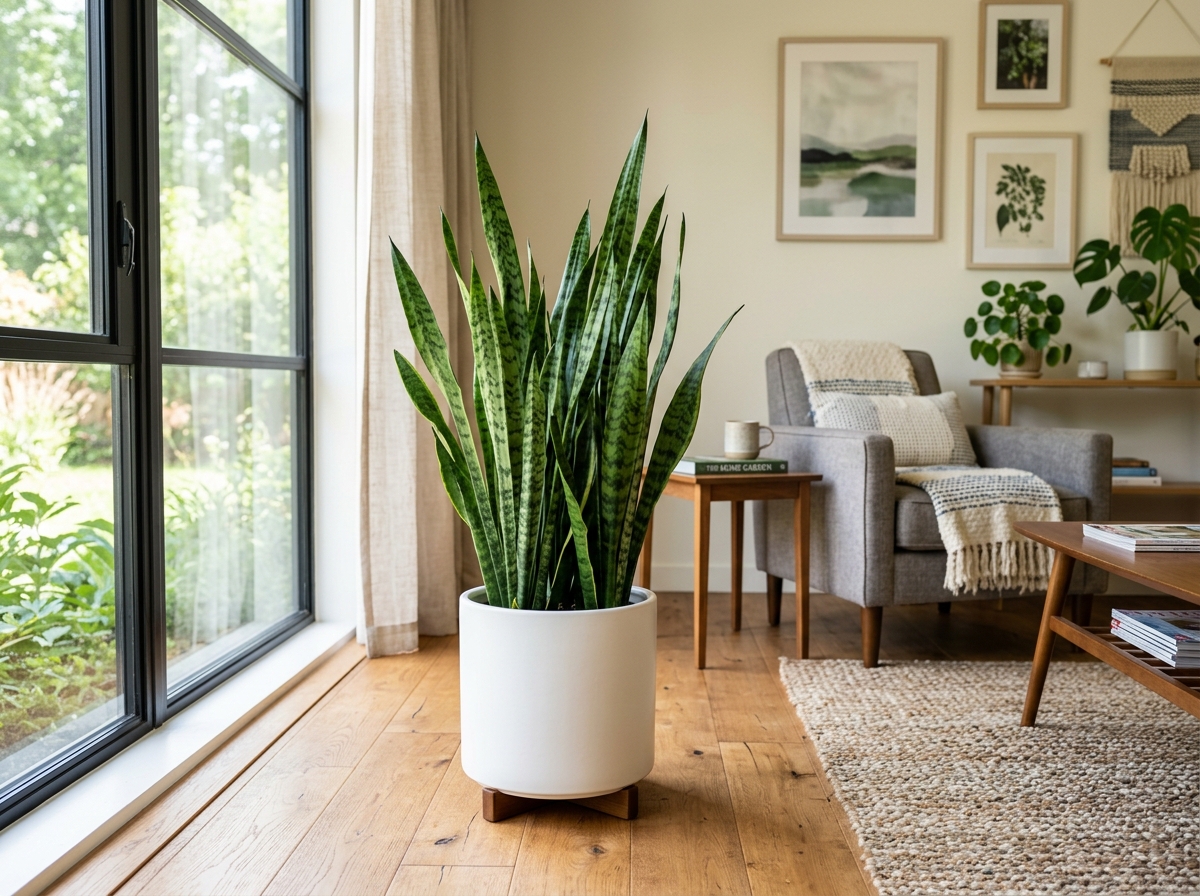
The Resilient Snake Plant: A Top Air Purifier Indoor Plant for Home
Commonly known as “Mother-in-Law’s Tongue,” the Sansevieria is a legend in the plant world. What makes it a unique air purifier indoor plant for home is its ability to perform Crassulacean Acid Metabolism (CAM). Unlike most plants that release oxygen during the day, the Snake Plant releases oxygen at night while absorbing carbon dioxide.
This makes it the perfect companion for bedrooms. It is particularly effective at removing formaldehyde, which is common in many household tissues and cleaning products. Varieties like the Snake Plant Laurentii are not only functional but also add a striking vertical aesthetic to any room. Learn more about why this plant is a must-have in our post on Snake Plants and Their Benefits for Air Quality.
Spider Plants: The Low-Maintenance Air Purifier Indoor Plant for Home
If you are new to being a “plant parent,” the Spider Plant (Chlorophytum comosum) is your best friend. It is incredibly resilient and famous for producing “spiderettes”—tiny baby plants that hang down from the mother plant.
NASA research found that a single Spider Plant in a 200-square-foot room is enough to act as an effective air filter. They are especially good at absorbing carbon monoxide and xylene. Because they are so easy to grow, they are often the first choice for busy households. Check out our Spider Plant Care Tips and Essential Care Tips for Spider Plants to keep yours thriving.
Pothos and Philodendrons for Vertical Cleaning
When you want to clean the air but are short on floor space, trailing vines are the answer. The Golden Pothos and Heartleaf Philodendron are world-class climbers. They are often called “the cubicle plant” because they can survive in low-light environments where other plants might struggle.
The Golden Pothos is arguably the easiest houseplant to care for, capable of removing a wide array of indoor toxins. If you want something with a bit more “pizzazz,” the Monstera Adansonii Swiss Cheese offers beautiful perforated leaves while still contributing to your home’s “green detox.”
Maximizing Your Green Clean: Care and Placement Tips
Buying the plant is only the first step. To ensure your air purifier indoor plant for home is actually doing its job, you need to keep it healthy. A sick or dusty plant cannot filter air effectively.
- Light Matters: Not all plants want a tan. While an Aloe Vera craves the sun, a Peace Lily will burn. Always match your plant to the light levels of your room. For help, see our Indoor Plant Lighting Tips.
- Watering Wisdom: Overwatering is the #1 killer of indoor plants. We recommend checking the soil moisture before reaching for the watering can. Some plants, like the Dracaena Lemon Lime, prefer to dry out slightly between drinks. For more advice, read our Watering Tips for Indoor Plants.
- Dust the Leaves: If dust settles on the leaves, it blocks the stomata and prevents the plant from absorbing toxins. Use a damp cloth to gently wipe the leaves once a month. This simple step is vital for Cleaning Indoor Plants for Dust.
- Strategic Placement: Place plants where air circulation is highest, or near known sources of pollution (like a new sofa or a freshly painted wall). Our Indoor Plant Placement Tips can help you find the perfect “power spot.”
- Quantity Counts: While one plant is better than none, you generally need about two large plants for every 100 square feet to see a measurable difference in air quality. Discover the math behind it in How Many Plants to Clean Room Air.
For those who want to take it a step further, innovative products like the KORU ONE or Verta combine the power of plants with mechanical filtration. These devices use aerated planters and smart sensors to boost the plant’s natural ability to break down VOCs by up to 93%.
Frequently Asked Questions about Indoor Plant Purifiers
Are air-purifying plants safe for cats and dogs?
This is a critical question! Many highly effective air purifiers, like English Ivy and Peace Lilies, are unfortunately toxic if ingested by pets. If you have a curious cat or a hungry hound, you should stick to non-toxic varieties like the Spider Plant, Bamboo Palm, or the Syngonium Red Arrow. We have a complete list of Cat-Safe Air Purifying Plants to help you shop safely.
Which plants are best for low-light environments?
If your living room feels more like a cave, don’t worry. The ZZ Plant, Snake Plant, and Peace Lily are champions of the shadows. They can survive in dim corners while still working to remove toxins from your air. You can find more hardy options in our guide to Low-Maintenance Air Purifying Plants.
How effective are plants for comprehensive air purification?
While plants are excellent at removing VOCs and gases, they aren’t as fast as mechanical HEPA filters at removing large particles like dust or pet dander. Think of plants as the “slow and steady” workers that handle the invisible chemicals. For the best results, we suggest a “multi-pronged” approach: use plants for chemical detox and a HEPA purifier for dust and allergens. This is especially useful if you are looking for Air Purifying Plants for Office environments where ventilation might be poor.
Conclusion
At Computadora Agora, we believe that a healthy home starts with the air you breathe. Incorporating air purifier indoor plants for home isn’t just about aesthetics; it’s a holistic step toward better mental health and physical wellness.
Whether you start with a single, hardy Snake Plant or build your own indoor jungle, you are making a conscious choice to detox your environment. The “green detox” provided by these botanical wonders can reduce stress, boost creativity, and—most importantly—provide you with the clean, fresh air you deserve.
Ready to start your journey? Explore our full House Plants Category to find the perfect air-cleaning companion for your living room today!
