
The Easiest Way to Root Spider Plant in Water (Quick Answer)
Want to root spider plant in water? Here’s the short version:
- Snip a healthy spiderette (baby plant) from the mother plant — look for one with tiny root nubs and at least 2-3 inches in size.
- Fill a clear glass jar with room-temperature, filtered or distilled water.
- Submerge only the base of the cutting — keep the leaves above water.
- Place in bright, indirect light and wait 7-10 days for roots to appear.
- Change the water every 4-7 days to keep it fresh and oxygenated.
- Transplant to soil once roots reach 2-3 inches long (roughly 4-6 weeks).
Spider plants are one of the most forgiving houseplants you can grow. They produce little “spiderette” babies on long, dangling stems — and those babies practically root themselves.
Water propagation is the easiest way to get started. You don’t need soil, special tools, or any prior experience. Roots typically start showing within a week, and you can watch the whole process happen right through the glass.
It’s also a great choice if you care about clean indoor air. Spider plants are well-known air purifiers, famously highlighted in the NASA Clean Air Study, and growing new ones from cuttings means more plants working for your home environment — at zero cost.
Why You Should Root Spider Plant in Water
If you’ve ever felt like you have a “black thumb,” the spider plant (Chlorophytum comosum) is here to change your mind. We love water propagation because it takes the guesswork out of gardening. When you plant a cutting directly into soil, you’re essentially flying blind. Is it rooting? Is it rotting? You won’t know until the plant either grows or dies.
When we root spider plant in water, we get a front-row seat to the “magic.” Watching those tiny white nubs transform into long, reaching roots is incredibly rewarding. Beyond the visual appeal, here are a few reasons why we recommend this method:
- Speed: Roots typically start to show in just 7 to 10 days.
- Simplicity: You don’t need to worry about soil moisture levels or “damping off” (a fungal disease that kills young seedlings).
- Health Monitoring: You can spot issues like rot or algae immediately and fix them before the plant is lost.
- Accessibility: All you need is a jar and some water.
Propagating your own plants is also a fantastic way to expand your collection for free. Once you master the Essential Care Tips for Spider Plants, you can turn one mother plant into dozens of gifts for friends. Plus, since spider plants are famous for their air-scrubbing abilities, having more of them around is a win for your health. To learn more about how these leafy friends help you breathe easier, check out our Indoor Plants and Air Quality: A Comprehensive Guide.
Step-by-Step Guide to Root Spider Plant in Water
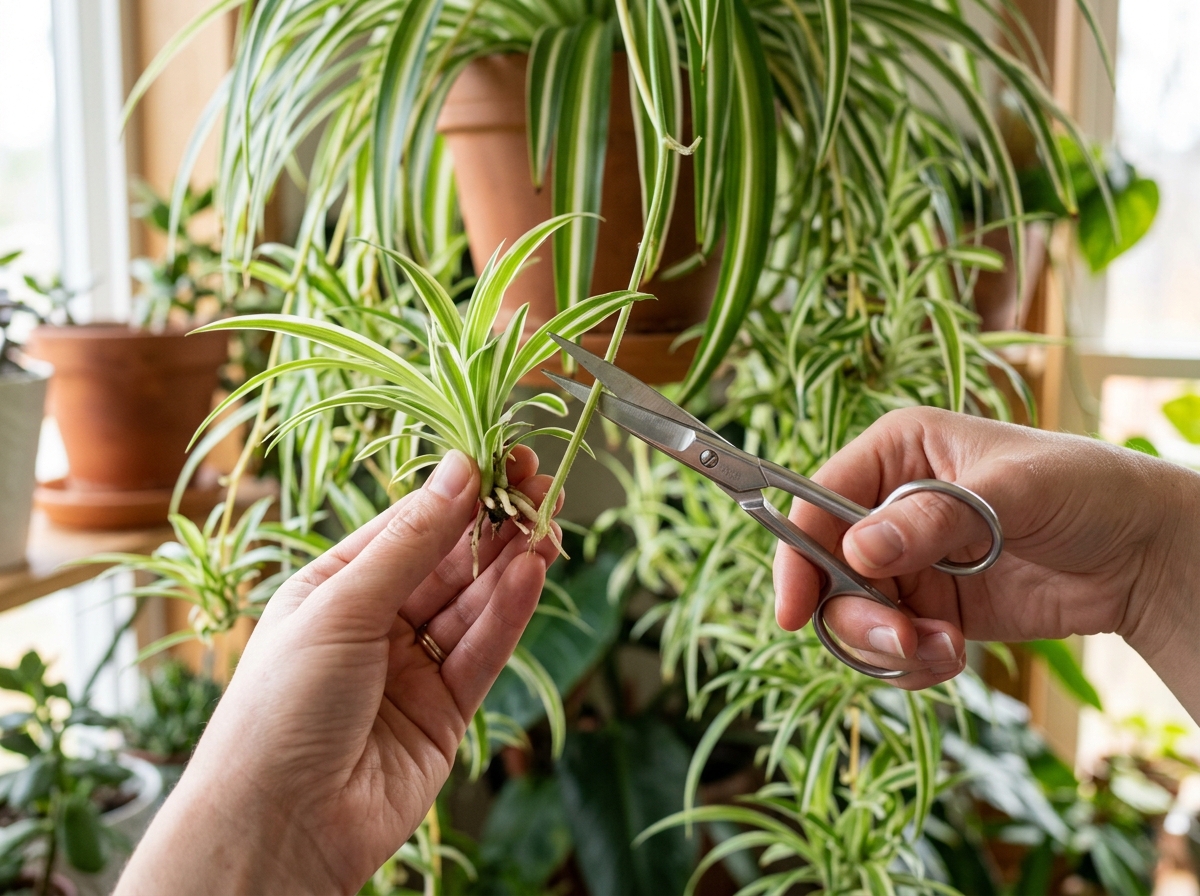
The process begins with the “spiderettes”—those adorable mini-clones that dangle from the mother plant like green fireworks. But before you start snipping, you need to pick the right candidate.
Selection Criteria for Spiderettes
Not all babies are ready to leave the nest. For the highest success rate, we look for:
- Size: The spiderette should be at least 2 to 3 inches in diameter. Smaller ones may not have enough stored energy to produce roots.
- Root Nubs: Look at the bottom of the baby plant. Do you see tiny brown or white bumps? Those are “nodes” or “initials,” and they are the starting point for future roots.
- Overall Health: Choose a pup with vibrant green (or variegated) leaves. Avoid any that look pale, limp, or have significant brown spots.
Water vs. Soil: Which is Better?
While both methods work, they offer different advantages. Here is a quick comparison based on our experience:
| Feature | Water Propagation | Soil Propagation |
|---|---|---|
| Rooting Speed | Very Fast (7-10 days) | Moderate (10-14 days) |
| Visibility | 100% visible through glass | Hidden underground |
| Root Strength | Slightly weaker/fleshy | Stronger/sturdier |
| Success Rate | Very High | High |
| Maintenance | Change water weekly | Keep soil consistently moist |
Preparing Your Cutting to Root Spider Plant in Water
Once you’ve picked your winner, it’s time to make the cut. We always use sterilized scissors or pruning shears. You can easily sanitize them with a quick wipe of 70% isopropyl alcohol. This prevents the spread of bacteria or fungi to your new plant.
Cut the long stem (the stolon) as close to the baby plant as possible, or leave about an inch of the “umbilical cord” attached if it helps you balance the plant in a jar.
Pro Tip: If your spiderette has leaves growing very low on its base, gently trim them off. You want the “node” area to be in the water, but you never want leaves submerged. Submerged leaves are the number one cause of rot. If you’re cleaning up your plants, don’t forget that dust can hinder growth; see our guide on Cleaning Indoor Plants for Dust to keep the parent plant healthy. For more general advice on keeping your spider plants happy, visit our Spider Plant Care Tips.
Setting Up the Vessel to Root Spider Plant in Water
Now, let’s talk about the “home” for your cutting. You don’t need anything fancy—a shot glass, a mason jar, or even a repurposed spice jar works perfectly.
- The Water Matters: Spider plants are notoriously sensitive to fluoride and chlorine found in city tap water. These chemicals can cause the tips of the leaves to turn brown. We recommend using distilled water, rainwater, or filtered water. If you must use tap water, let it sit out for 24 hours to allow the chlorine to dissipate.
- Positioning: Fill your vessel so the water level just touches the base of the spiderette. You can use a bit of plastic wrap with a hole poked in it or even toothpicks to suspend the plant if the jar opening is too wide.
- Light and Temperature: Place your jar in a spot with bright, indirect light. A North or East-facing windowsill is usually perfect. Avoid direct, scorching sunlight, which can cook the delicate cutting and encourage algae growth. Keep the temperature between 65-75°F (18-24°C) for optimal rooting. For more on proper hydration, check out Watering Tips for Indoor Plants.
Maintenance and Troubleshooting Common Issues
Your job isn’t done once the plant is in the jar. To successfully root spider plant in water, you need to maintain a clean environment.
- Change the Water Regularly: We recommend a full water change every 4 to 7 days. This replenishes the oxygen levels that the roots need to breathe. Stagnant water loses oxygen and becomes a breeding ground for bacteria.
- Algae Prevention: If you notice a green film on the glass or the roots, that’s algae. It’s not usually harmful in small amounts, but it competes for nutrients. Simply rinse the roots gently and scrub the jar before refilling.
- Cloudy Water: This is a red flag. If the water looks milky or smells “off,” your cutting might be starting to rot. Rinse the base, trim away any mushy parts, and use fresh, clean water.
- Brown Tips: If the baby plant develops brown tips while in the water, it’s likely a reaction to fluoride. Switch to distilled water immediately.
Spider plants are generally Low-Maintenance Air Purifying Plants, but they still need that basic weekly check-in to thrive in a hydroponic setup.
Transitioning from Water to Soil
After about a month, you’ll notice a thick “beard” of white roots. This is the most critical phase: moving from their water home to a soil home.
When is it Ready?
Don’t rush the process. We wait until the roots are at least 2 to 3 inches long. Roots that are too short may struggle to anchor the plant in soil, while waiting too long (several months) can make the transition harder because “water roots” are physiologically different from “soil roots.”
The Transplanting Process
- Choose the Right Pot: Use a small pot (4 inches is usually plenty) with excellent drainage.
- The Mix: Use a well-draining potting soil. You can mix in a little perlite or coco coir to keep it light.
- Planting: Make a hole in the center of the soil, gently spread the roots out, and cover them up to the base of the leaves.
- The “Wet” Period: Because your plant is used to 100% water, you need to keep the soil extra moist for the first 1-2 weeks. This helps the roots adjust to their new texture without going into shock. Gradually reduce watering until you are following a standard spider plant routine.
If you find that your new plant grows so fast it becomes root-bound (a common “problem” with these vigorous growers!), you’ll want to read our guide on How to Repot a Root-Bound Spider Plant.
Frequently Asked Questions about Spider Plant Propagation
How long does it take for spider plant cuttings to root in water?
Typically, you will see the first tiny white roots in 7 to 10 days. However, for the plant to be strong enough for soil, you should leave it in water for about 4 to 6 weeks until the roots are a few inches long. Warmer temperatures and better light will speed this up!
Can spider plants grow in water permanently?
Yes! You can grow spider plants hydroponically (in water only) indefinitely. However, water doesn’t contain the minerals found in soil. To keep a long-term water plant healthy, you’ll need to add a urea-free liquid fertilizer at half-strength every few weeks during the growing season. That water-grown plants may grow more slowly than those in soil.
Why are my spider plant babies dying in water?
The most common culprits are:
- Submerged Leaves: If the leaves sit in water, they will rot and kill the whole plantlet.
- Chemical Sensitivity: Chlorine or fluoride in tap water can be toxic over time.
- Stagnant Water: Not changing the water leads to oxygen depletion and bacterial growth.
- Too Much Sun: Direct sun can overheat the water and burn the delicate new roots.
Conclusion
Learning how to root spider plant in water is one of the most satisfying projects for any indoor gardener. It’s a low-cost, high-reward way to fill your home with greenery and improve your air quality. Whether you plan to keep your new plants in decorative jars or move them into colorful pots, the journey from a tiny spiderette to a flourishing adult plant is a joy to watch.
Ready to explore more leafy companions? Dive into our House Plants Category for more guides, tips, and tricks to keep your indoor jungle thriving. Happy planting!
